Coexistence of balance and hierarchies: An ego perspective to explain empirical networks
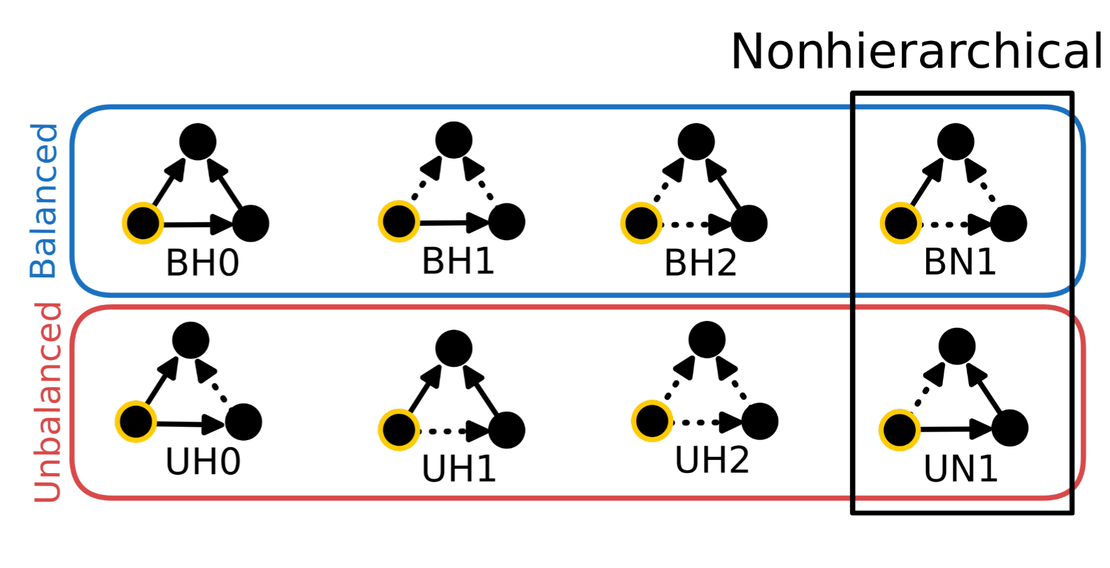
How do people change positive and negative relations in social networks? Two conflicting mechanisms, balance and status hierarchies, coexist and influence each other. The mechanisms are integrated into an agent-based model where individuals aim to resolve inconsistencies with balance and status. By fitting the model to real-world networks, one can successfully replicate observed patterns in social networks. The study suggests that social configurations may be fragile and vulnerable to disruptions.
Read More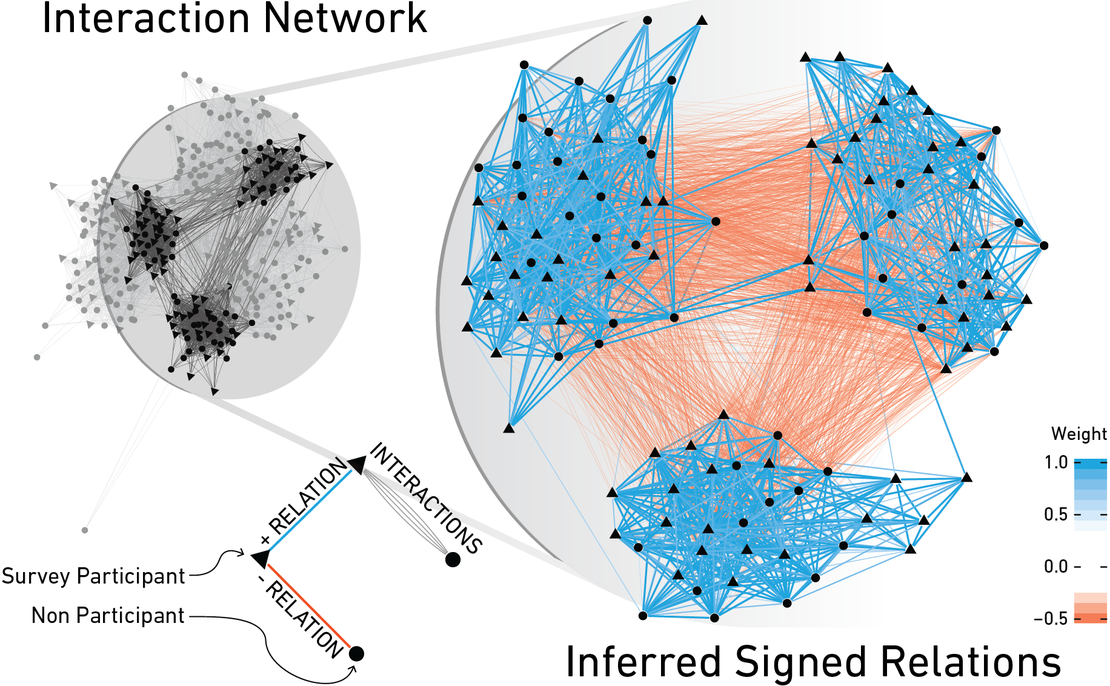
Reconstructing signed relations from interaction data
This study presents a statistical network method to infer weighted signed relations from interaction data. The method, called the Φ-method, assumes that a statistical over-representation of interactions signals a positive relation and an under-representation signals a negative relation. TheΦ-method was tested on four classical interaction datasets and showed promising results in predicting reported relations and reconstructing the underlying relational networks of the communities.
Read More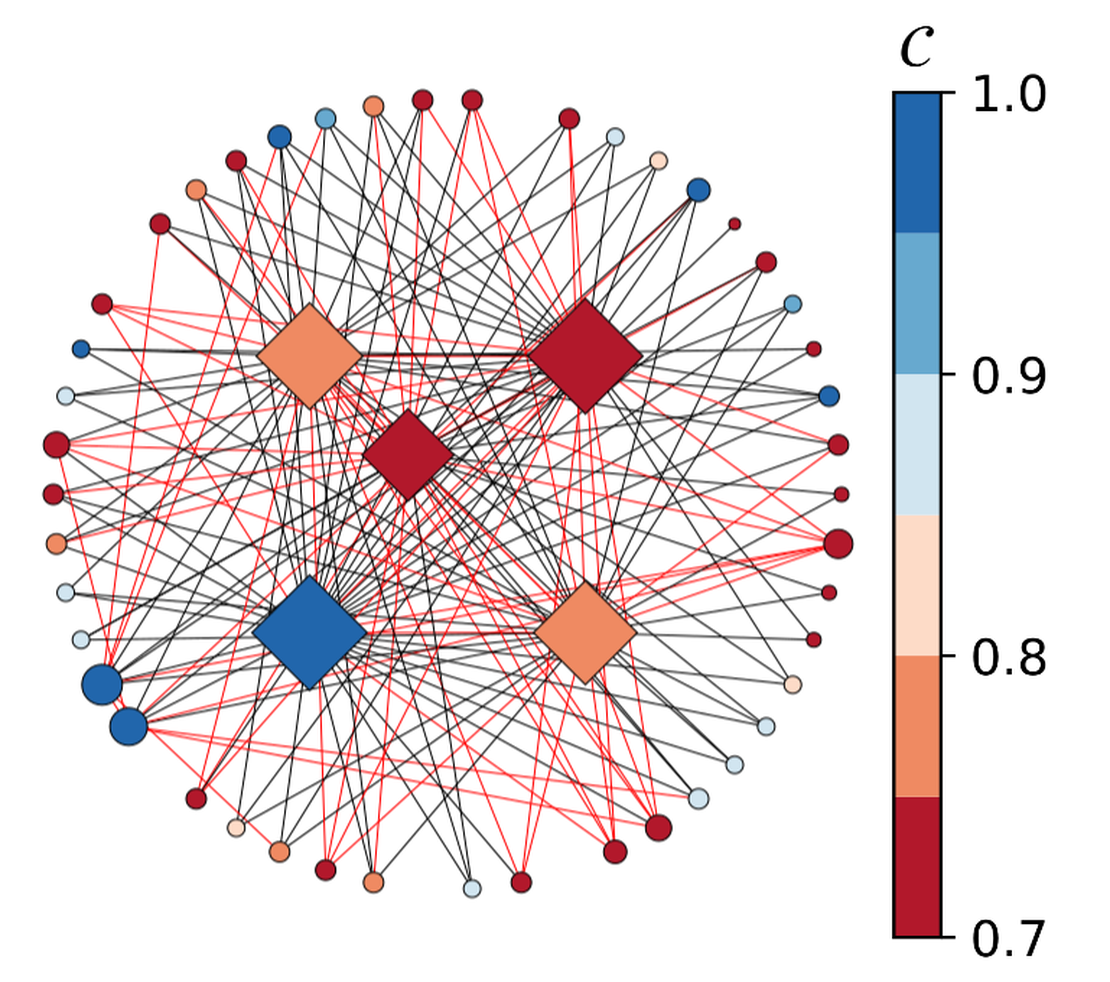
Modeling the impact of environmental consciousness on the supply-demand relationship between firms and customers
The study models the impact of environmental consciousness on the supply-demand relationship between firms and customers. Environmental consciousness can lead to supply-demand deficits, but customers forming unconditional supply links and firms improving their environmental-friendly production can mitigate these deficits. The results show that this approach can inform policies to reduce both supply-demand deficits and environmental pollution.
Read More