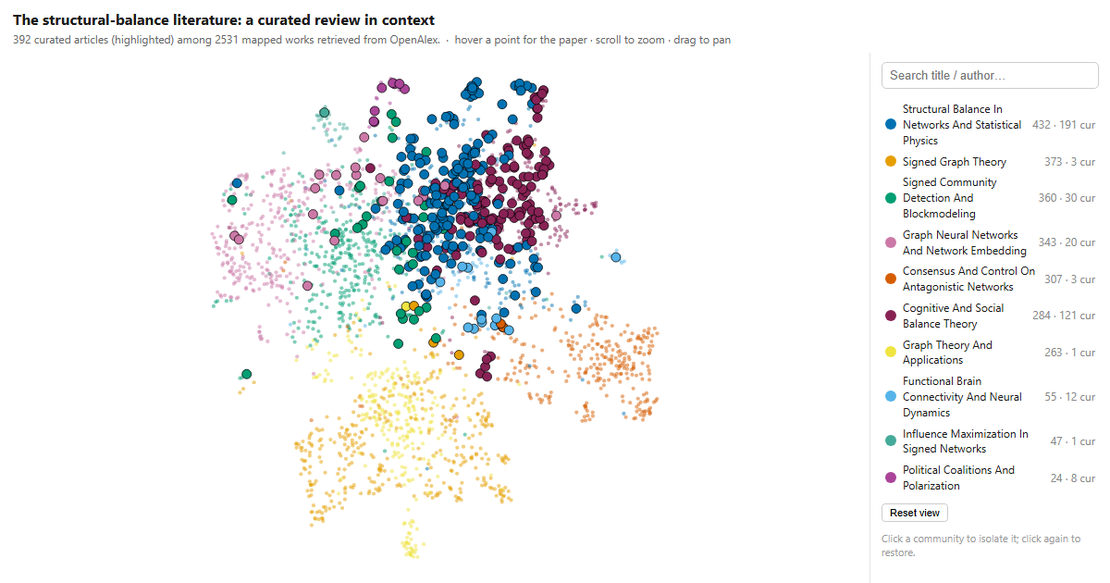
A Curated Review in Context: An Interactive Knowledge Map of the Structural-Balance Literature
When you write a review, one question follows you around: did you cover everything? For an interpretive, physics-oriented review of structural balance the honest answer is “no, on purpose”. The reference list is a curated selection of the work that matters conceptually, not a systematic harvest of every paper that mentions a signed network. The map below is an attempt to show that rather than assert it.
Read More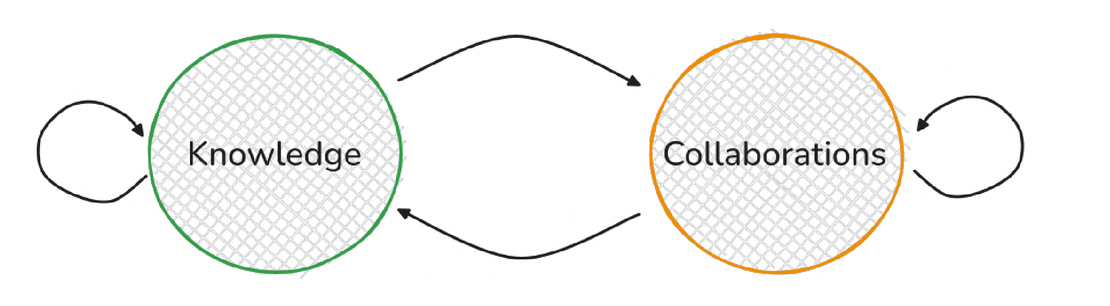
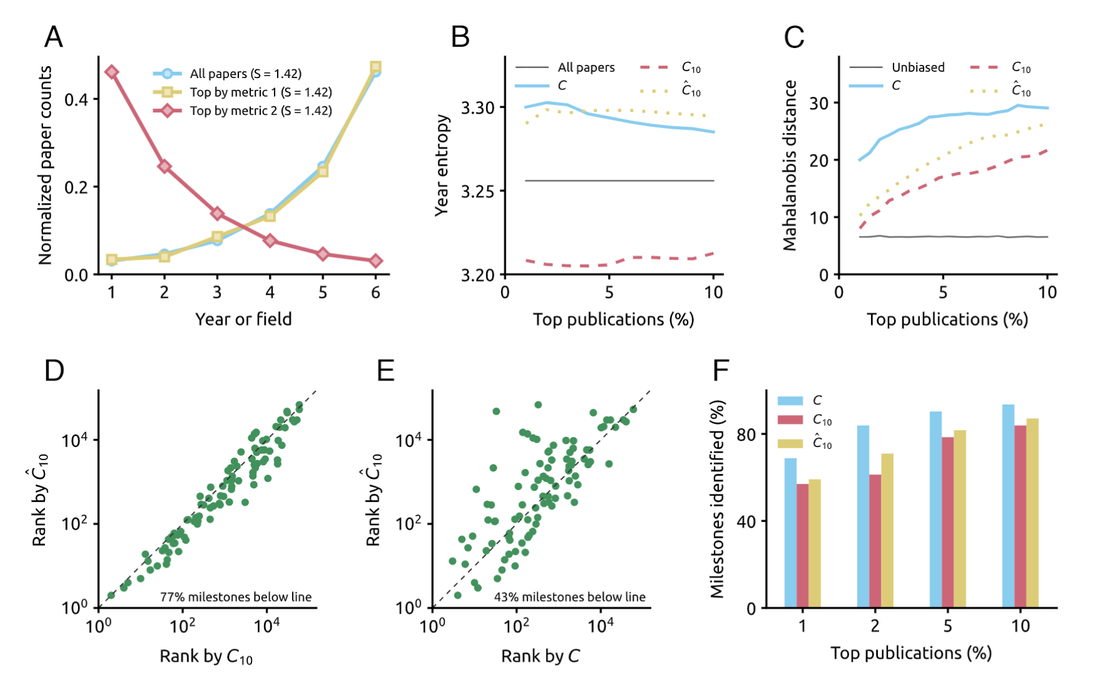
The quest for an unbiased scientific impact indicator remains open
A study published in the journal PNAS questioned the unbiasedness of a scientific impact indicator called ̂c10, which was previously thought to be fair. The analysis shows that ̂c10 exhibits a strong age bias, meaning it favors older papers over newer ones. This bias is due to ̂c10's tendency to rank older papers higher than younger ones. The study suggests that this bias could be a problem for scientists who rely on ̂c10 to evaluate the impact of their research. Furthermore, the study found that raw citation count c outperforms ̂c10 in identifying groundbreaking research, because it is not controlled for temporal distribution. This calls into question the fairness of ̂c10 and highlights the need for more research into algorithmic bias and fairness in scientometrics. The authors of the study suggest that developing unbiased indicators of scientific impact remains a pressing question in the scientometrics and science of science communities.
Read More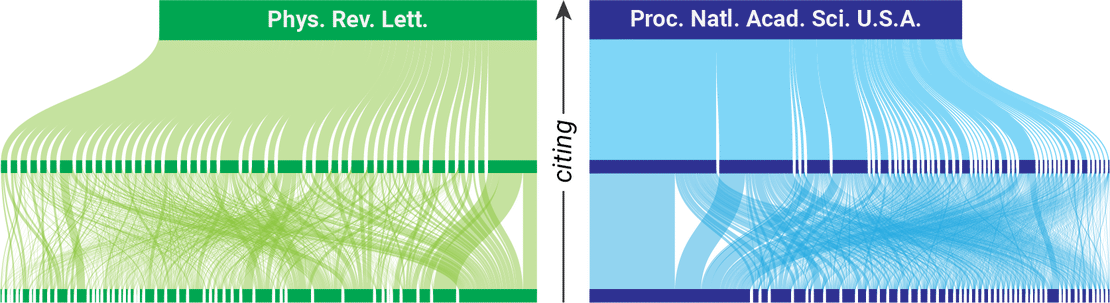
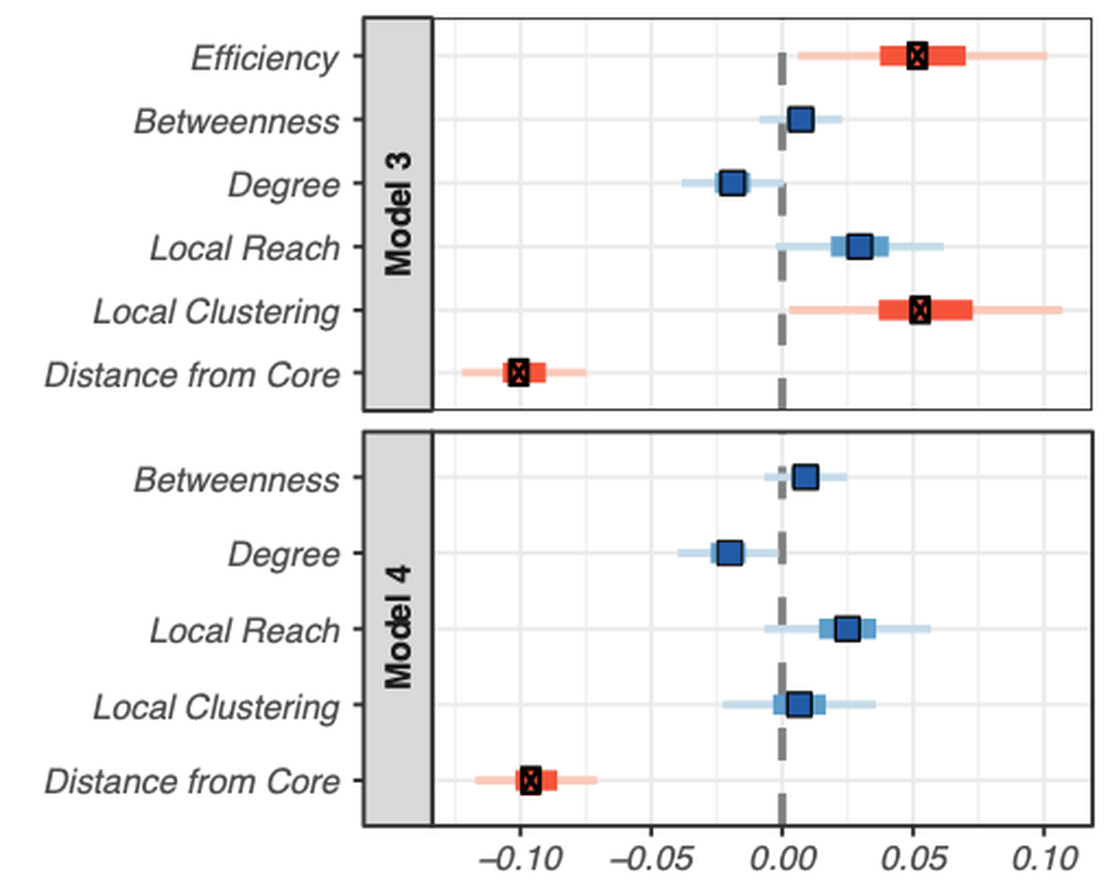
Network embeddedness indicates the innovation potential of firms
The R&D network of 14,000 firms over 25 years was reconstructed to understand how network embeddedness affects innovation potential. This study found that firms with higher weighted k-core centrality have a higher innovation output. This means that being well-connected in the network can lead to more patents.
Read More
Success in Science - Special Issue
Scientific Networks and Success Every researcher is affected by how scientific performance is measured. How should it be measured? Do we have the right data to do it? How can we make it fair and unbiased?
Read More
Foreword to the special issue on success in science
Science is a complex social endeavour that relies on collaboration networks to advance knowledge. This meta-science, or the 'science of science', helps stakeholders understand, shape and guide the development of this system. A key observation is that the number of references and co-authors per paper has increased, illustrating the importance of collaboration in synthesizing research findings. Understanding these networks and their evolution is crucial for identifying knowledge-generating processes in science and allocating resources efficiently.
Read More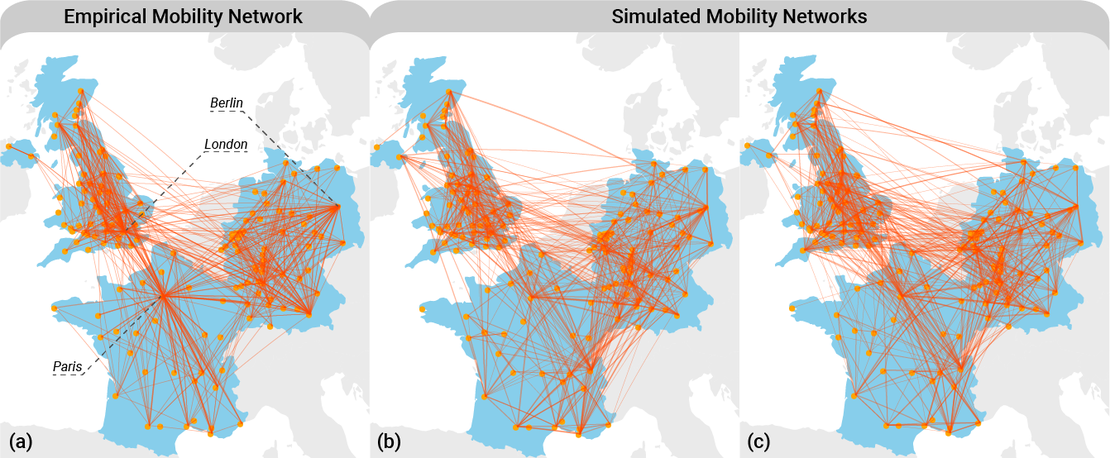
Reproducing scientists' mobility: a data-driven model
Scientists often move around the world to share ideas and work together, but how do these moves actually happen? This study looked at millions of career paths to map out how researchers travel between cities, countries and institutions. It found that most scientists prefer to move shorter distances, usually less than 1000 kilometers, and tend to choose places that are both close and well-regarded. The research also showed that the way we visualize these moves changes depending on the scale. At the city level, scientists move more freely, while at the country or institution level, clear pathways called “knowledge corridors” emerge. This helps us understand how knowledge spreads and how scientific careers develop over time, with important implications for both scientists and policymakers.
Read More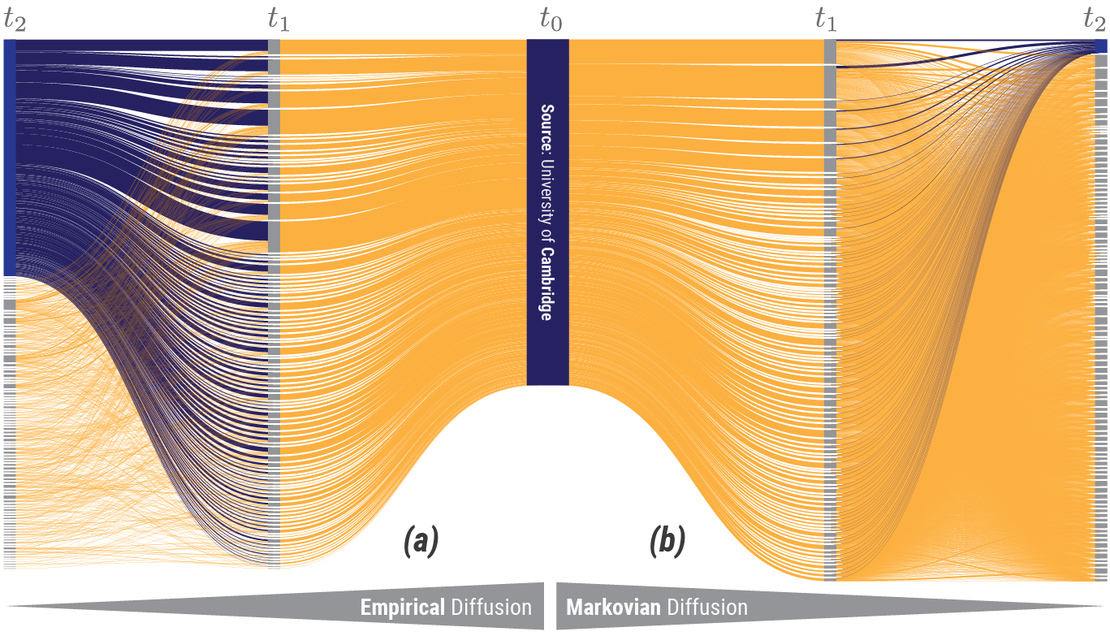
The mobility network of scientists: Analyzing temporal correlations in scientific careers
The study of scientist mobility is important for knowledge exchange and understanding the career trajectories of scientists. The researchers analyzed 3.5 million career trajectories of scientists using a novel method of higher-order networks. They found strong evidence for temporal correlations at the level of universities, indicating that scientists tend to move between specific institutions. These correlations also exist at the level of countries but not cities. The results have implications for the efficiency of mobility programs and the institutional path dependence of scientific careers.
Read More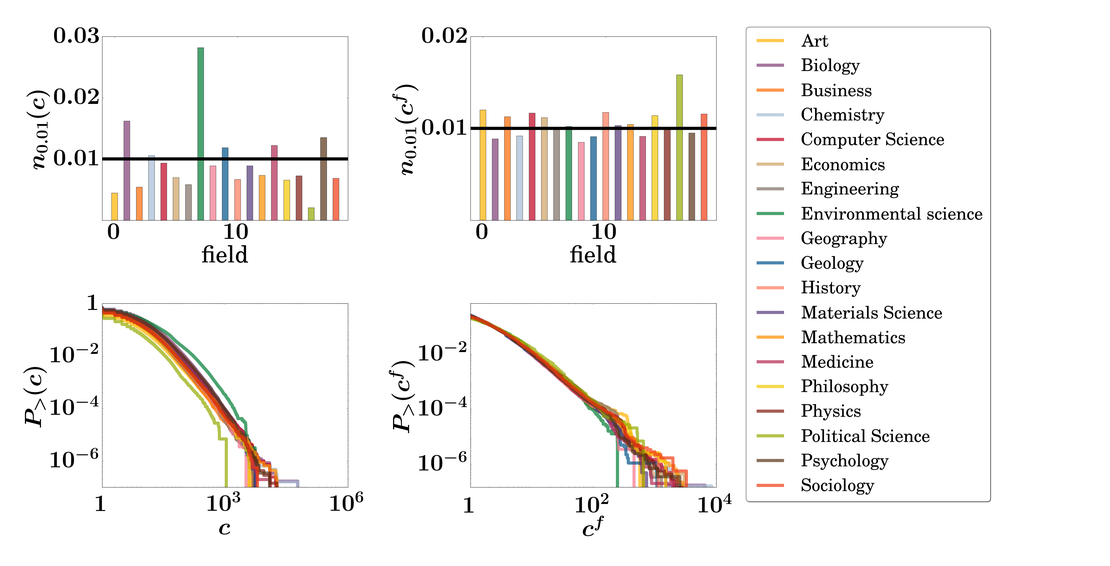
Quantifying and suppressing ranking bias in a large citation network
Citation counts for papers from different fields can't be compared directly because they adopt different citation practices. Researchers have proposed various procedures to suppress these biases, but a new statistical framework shows that existing indicators, including the relative citation count, are still biased by paper field and age. A new normalization procedure motivated by the z-score produces much less biased rankings when applied to citation count and PageRank score. The problem of achieving an ideal unbiased ranking of publications remains open.
Read More