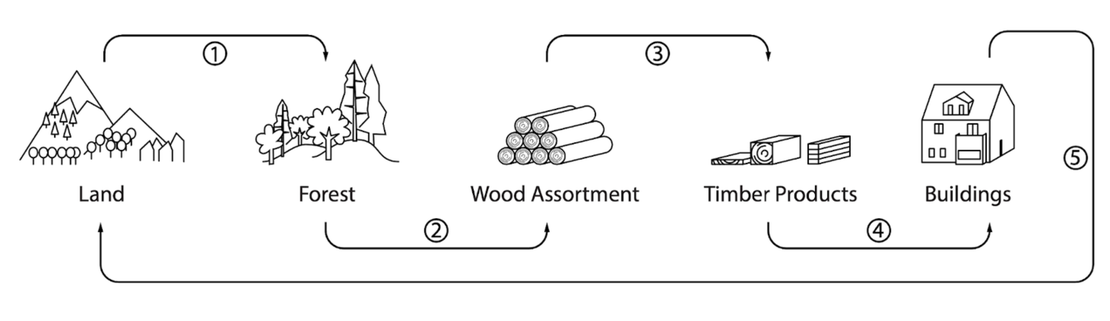
Mainstreaming Wood in Construction: A Holistic Approach
The building sector is one of the highest CO2 emitters, and thanks to modern technologies, using more sustainable construction materials can help deliver net-zero emissions as well as good housing. Using timber would not only increase carbon storage in our buildings, but would also avoid the CO2 emissions of conventional building materials such as concrete - which is still the default.
Read More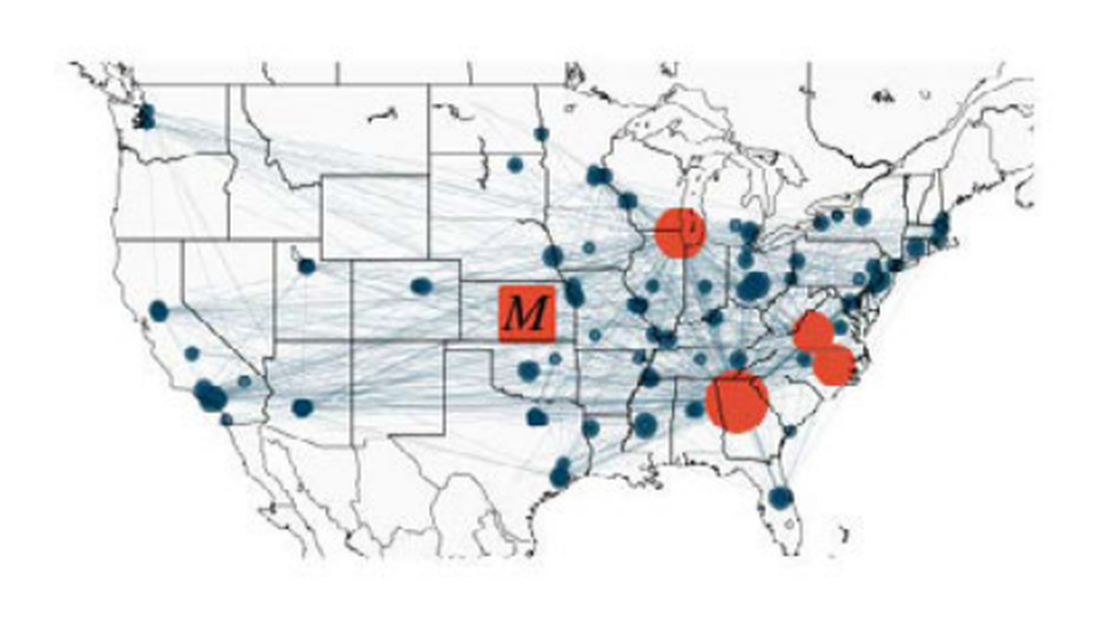
Efficiency and resilience: Key drivers of distribution network growth
Distribution networks, which supply goods from manufacturers to final buyers, are crucial for a functioning economy. A network model is proposed to describe the emergence and growth of these networks. The model considers two firm-level practices: centralization and multi-sourcing. Centralization enhances network efficiency by using short distribution paths, while multi-sourcing fosters resilience by providing multiple distribution paths. The model was validated using data on drug shipments in the US, and it successfully replicates several structural features of the empirical networks, including their out-degree and path length distributions, as well as their resilience and efficiency properties. The findings suggest that the proposed firm-level practices effectively capture the network growth process that leads to the observed structures.
Read More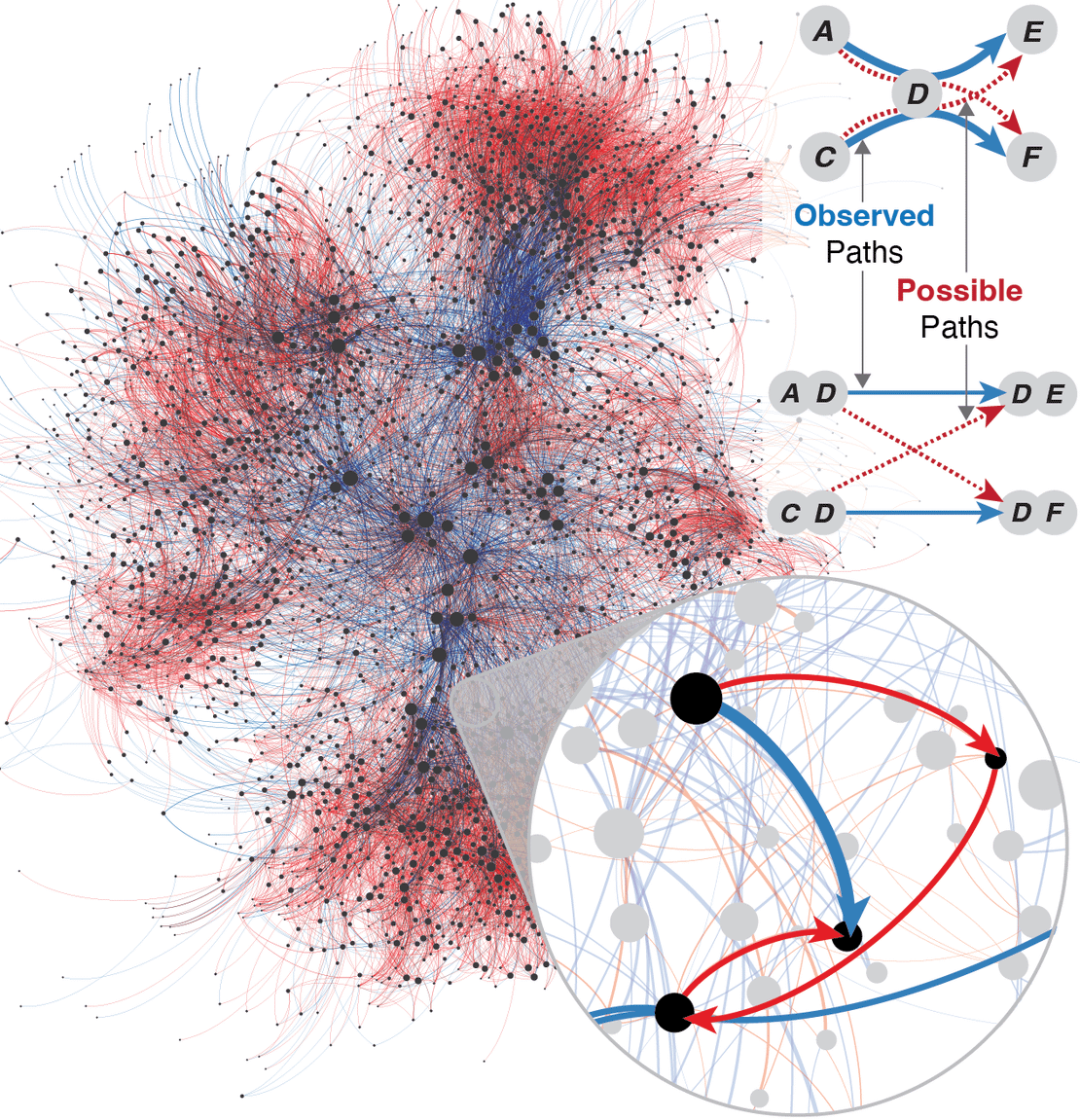
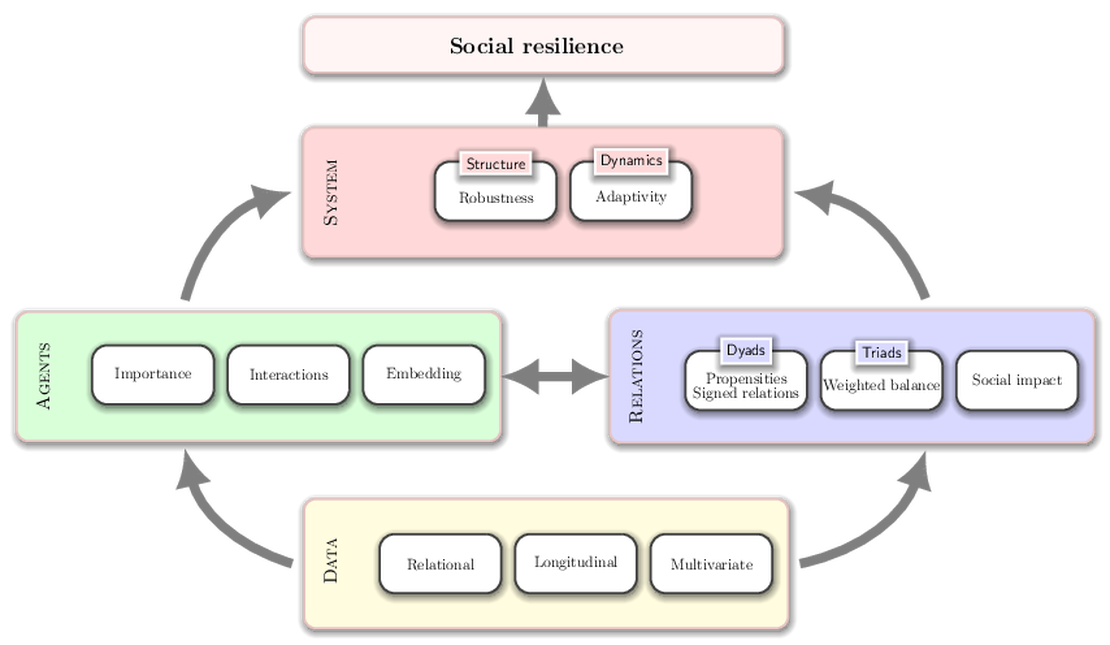
Modeling social resilience: Questions, answers, open problems
A four-step framework is developed to quantify social resilience in highly volatile organizations. The framework combines agent-based and network models to assess robustness and adaptivity. Instantaneous monitoring is possible using longitudinal data, shifting attention from micro configurations to macro-properties of social networks.
Read More