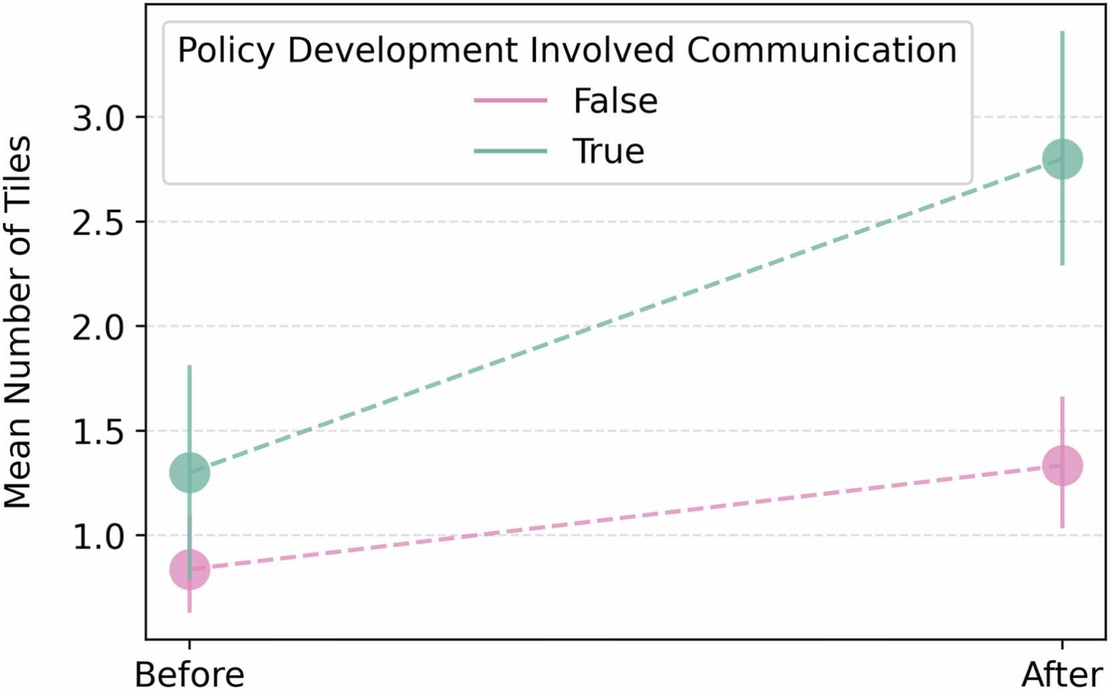
Beyond top-down policymaking: Policymaker–landowner interaction promotes reforestation in a strategy game
A study found that interacting with policymakers during policy drafting can increase adoption of reforestation strategies. The research used a strategy game to simulate real-world land management decisions in Scotland. The study suggests that early stakeholder engagement can enhance policy effectiveness by addressing ecological and social barriers to implementation.
Read More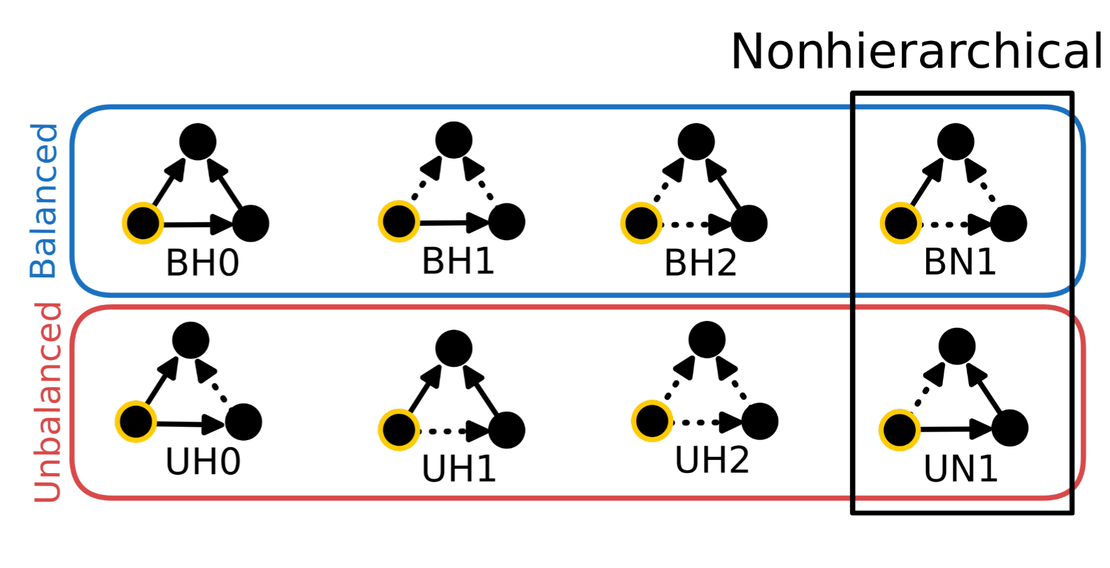
Coexistence of balance and hierarchies: An ego perspective to explain empirical networks
How do people change positive and negative relations in social networks? Two conflicting mechanisms, balance and status hierarchies, coexist and influence each other. The mechanisms are integrated into an agent-based model where individuals aim to resolve inconsistencies with balance and status. By fitting the model to real-world networks, one can successfully replicate observed patterns in social networks. The study suggests that social configurations may be fragile and vulnerable to disruptions.
Read More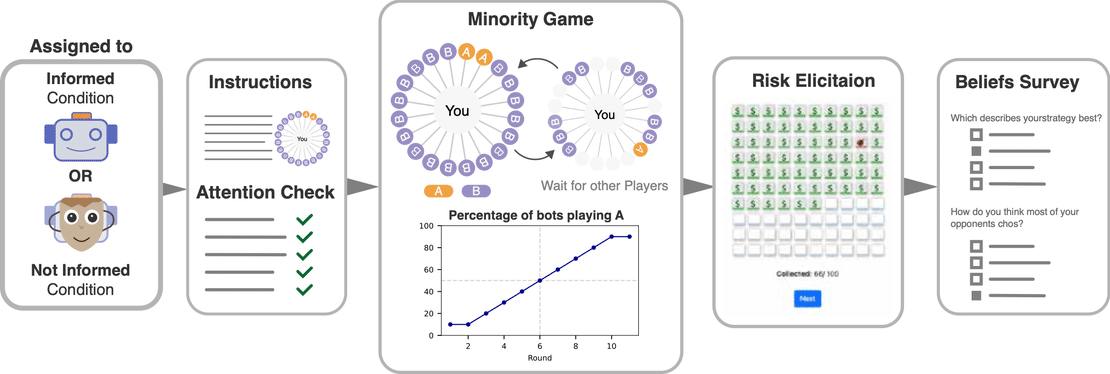
Irrational herding persists in human-bot interactions
A study of 1,997 participants playing a minority game with bots found that 30% followed the majority, despite theoretical expectations of no herding. The study explored how humans interact with automated entities and how their behavior changes when they are aware of interacting with bots. Herding behavior persisted even when participants were aware of interacting with automated entities.
Read More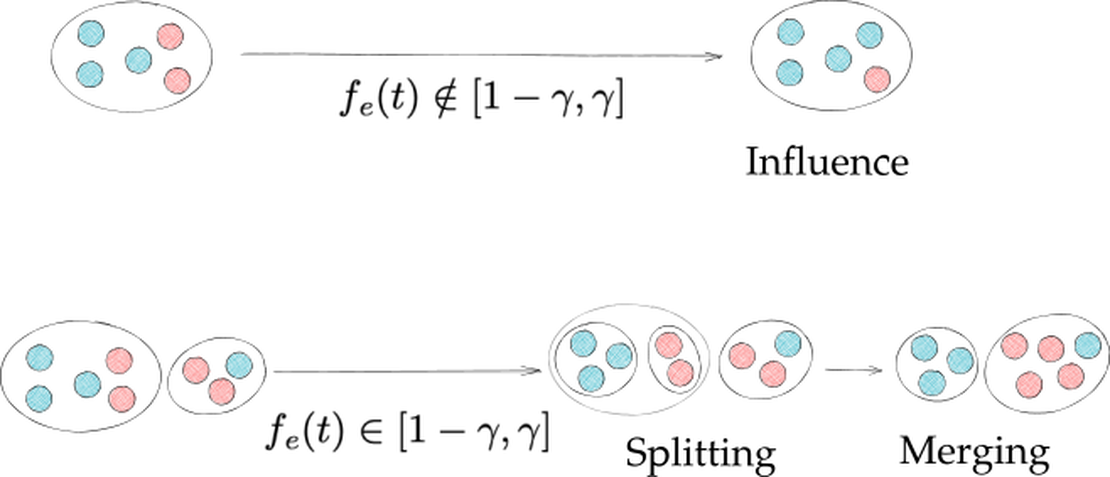
Fragmentation from group interactions: A higher-order adaptive voter model
The adaptive voter model is extended to hypergraphs to study group interactions. The model reveals new phenomena, such as the formation of bands in magnetization and the lack of an equilibrium state. The results indicate that fragmentation decreases with the threshold parameter gamma and initial mean degree. The model provides an analytic explanation for the bands and their discontinuity when the hypergraphs are sparse. The simulations show that the system can split into two components with opposite opinions.
Read More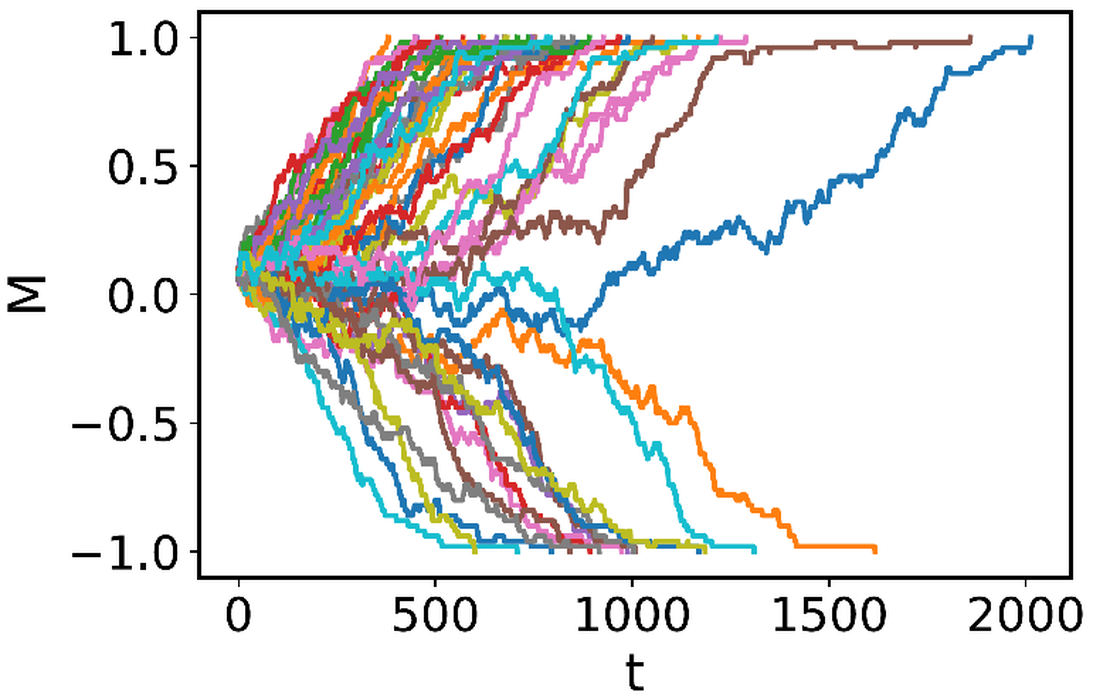
Consensus from group interactions: An adaptive voter model on hypergraphs
The researchers studied how group interactions affect the emergence of consensus in a spin system. They found that group interactions amplify small initial opinion biases, accelerate the formation of consensus, and lead to a drift of the average magnetization. The model considers groups of agents represented by hyperedges of different sizes in a hypergraph. The heterogeneity of group sizes is controlled by a parameter β. The study aims to understand the impact of β on reaching consensus. The researchers used computer simulations and an analytic approach to study the dynamics of the average magnetization.
Read More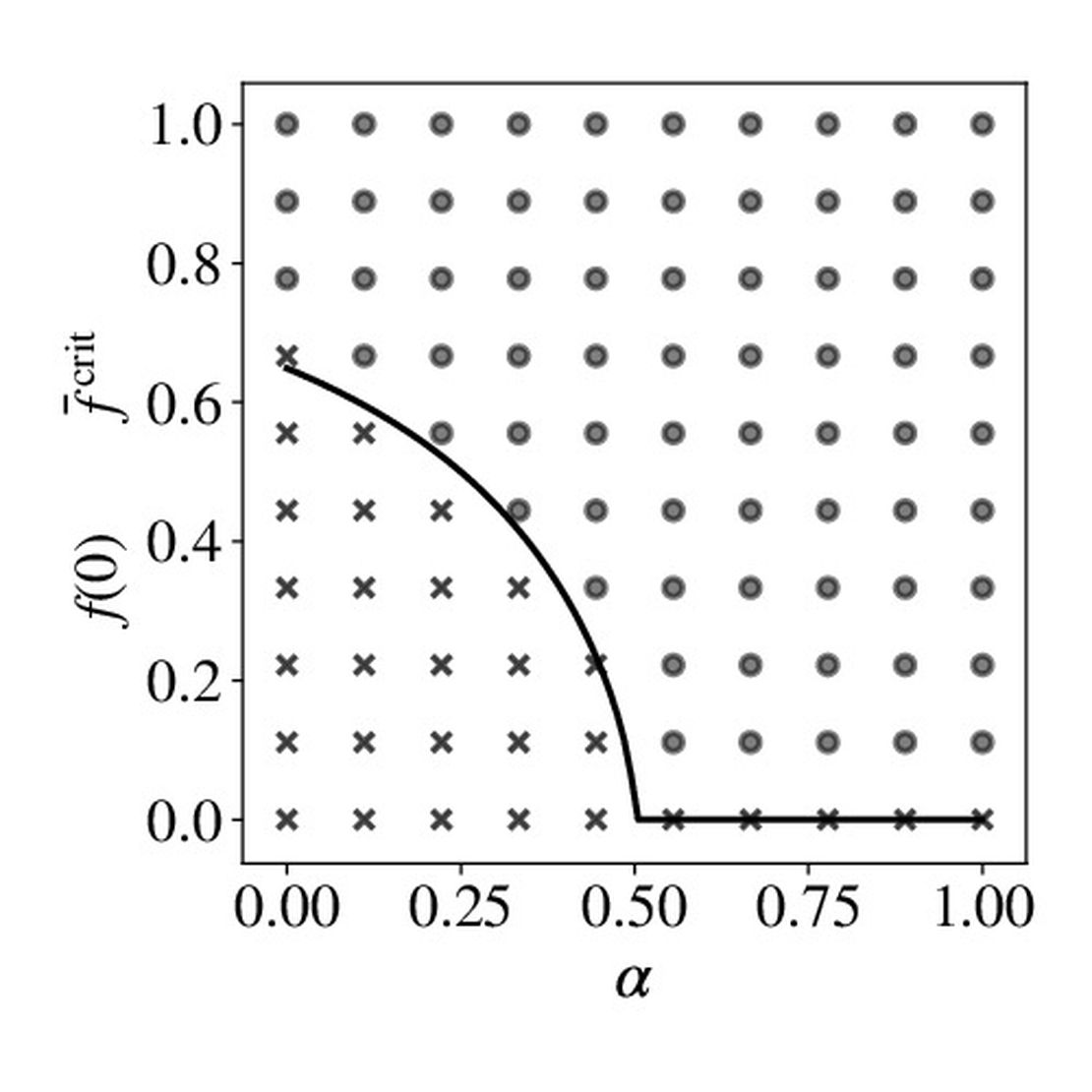
Should the government reward cooperation? Insights from an agent-based model of wealth redistribution
A multi-agent model was used to investigate how government bonuses impact cooperation. The model showed that bonuses can promote cooperation, especially in a global information regime. In this regime, the critical bonus needed to encourage cooperation decreases as the level of cooperation increases. This allows the government to lower tax rates while maintaining high cooperation levels.
Read More