Publications
- Home /
- Publications
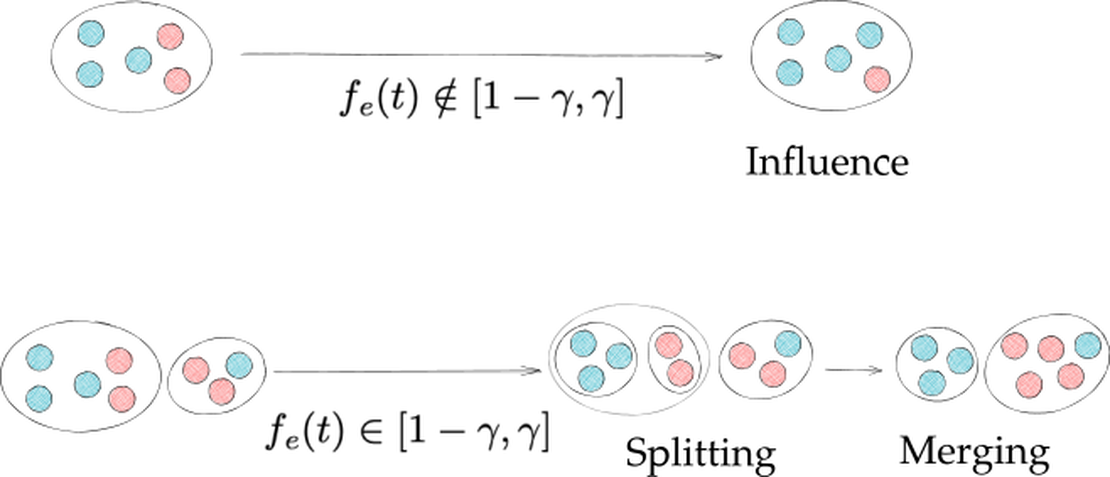
Fragmentation from group interactions: A higher-order adaptive voter model
- Nikos Papanikolaou , Renaud Lambiotte , Giacomo Vaccario
- Network theory , Cooperation and opinion dynamics
The adaptive voter model is extended to hypergraphs to study group interactions. The model reveals new phenomena, such as the formation of bands in magnetization and the lack of an equilibrium state. The results indicate that fragmentation decreases with the threshold parameter gamma and initial mean degree. The model provides an analytic explanation for the bands and their discontinuity when the hypergraphs are sparse. The simulations show that the system can split into two components with opposite opinions.
Read More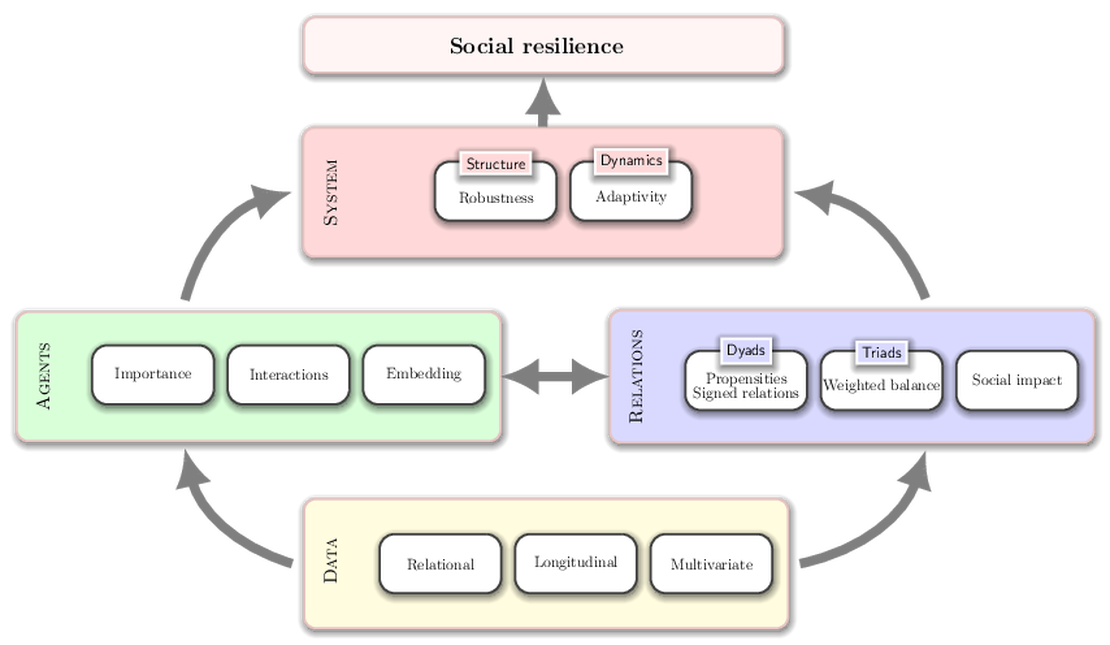
Modeling social resilience: Questions, answers, open problems
- Frank Schweitzer , Georges Andres , Giona Casiraghi , Christoph Gote , Ramona Roller , Ingo Scholtes , Giacomo Vaccario , Christian Zingg
- Resilience , System thinking
A four-step framework is developed to quantify social resilience in highly volatile organizations. The framework combines agent-based and network models to assess robustness and adaptivity. Instantaneous monitoring is possible using longitudinal data, shifting attention from micro configurations to macro-properties of social networks.
Read More
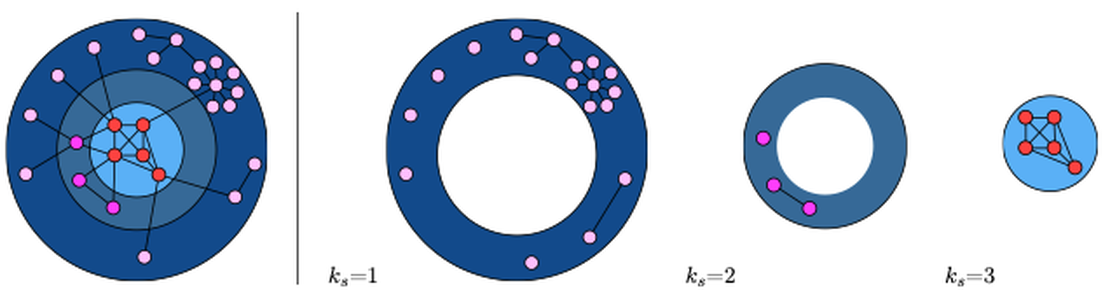
The Role Of Network Embeddedness On The Selection Of Collaboration Partners: An Agent-Based Model With Empirical Validation
- Frank Schweitzer , Antonios Garas , Mario V. Tomasello , Giacomo Vaccario , Luca Verginer
- Data driven models , Economic networks , Agent based models
Scientists study the role of network embeddedness in collaboration partner selection using an agent-based model. The model reproduces empirical coreness differences of collaboration partners and explains why high network embeddedness leads to a change in partner selection. The study focuses on two types of collaborations: R&D alliances between firms and co-authorship relations between scientists. The model's results suggest that agents with high network embeddedness are more likely to select partners that are already well-connected within the network. This has implications for the design of collaboration systems and the understanding of how agents form collaborations.
Read More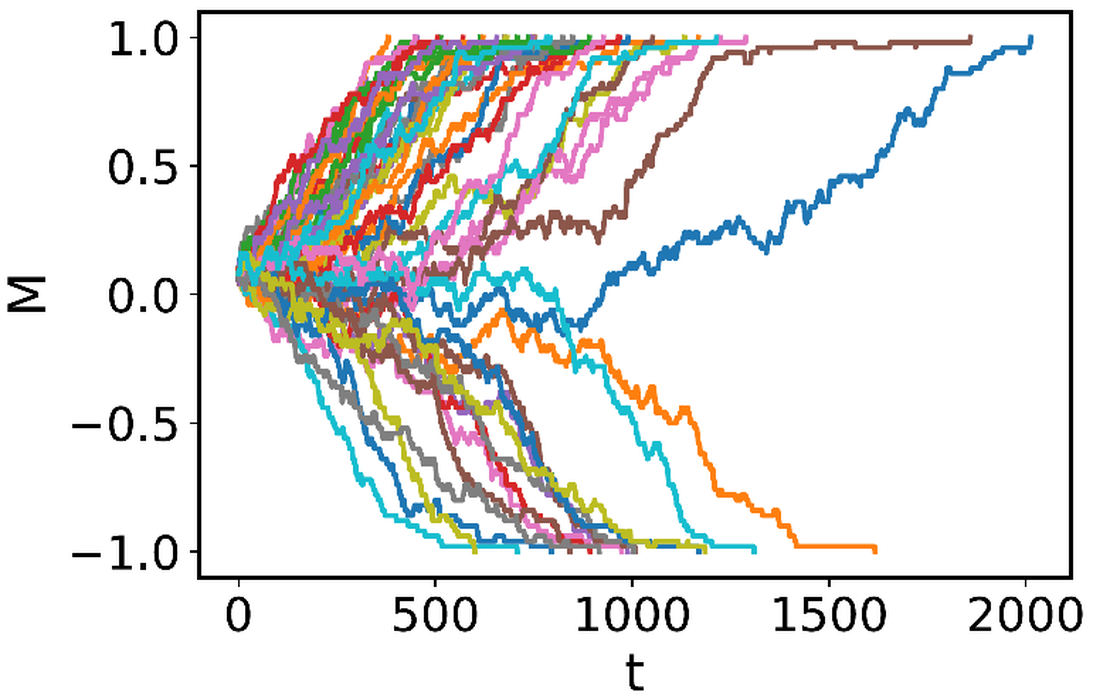
Consensus from group interactions: An adaptive voter model on hypergraphs
- Nikos Papanikolaou , Giacomo Vaccario , Erik Hormann , Renaud Lambiotte , Frank Schweitzer
- Network theory , Cooperation and opinion dynamics
The researchers studied how group interactions affect the emergence of consensus in a spin system. They found that group interactions amplify small initial opinion biases, accelerate the formation of consensus, and lead to a drift of the average magnetization. The model considers groups of agents represented by hyperedges of different sizes in a hypergraph. The heterogeneity of group sizes is controlled by a parameter β. The study aims to understand the impact of β on reaching consensus. The researchers used computer simulations and an analytic approach to study the dynamics of the average magnetization.
Read More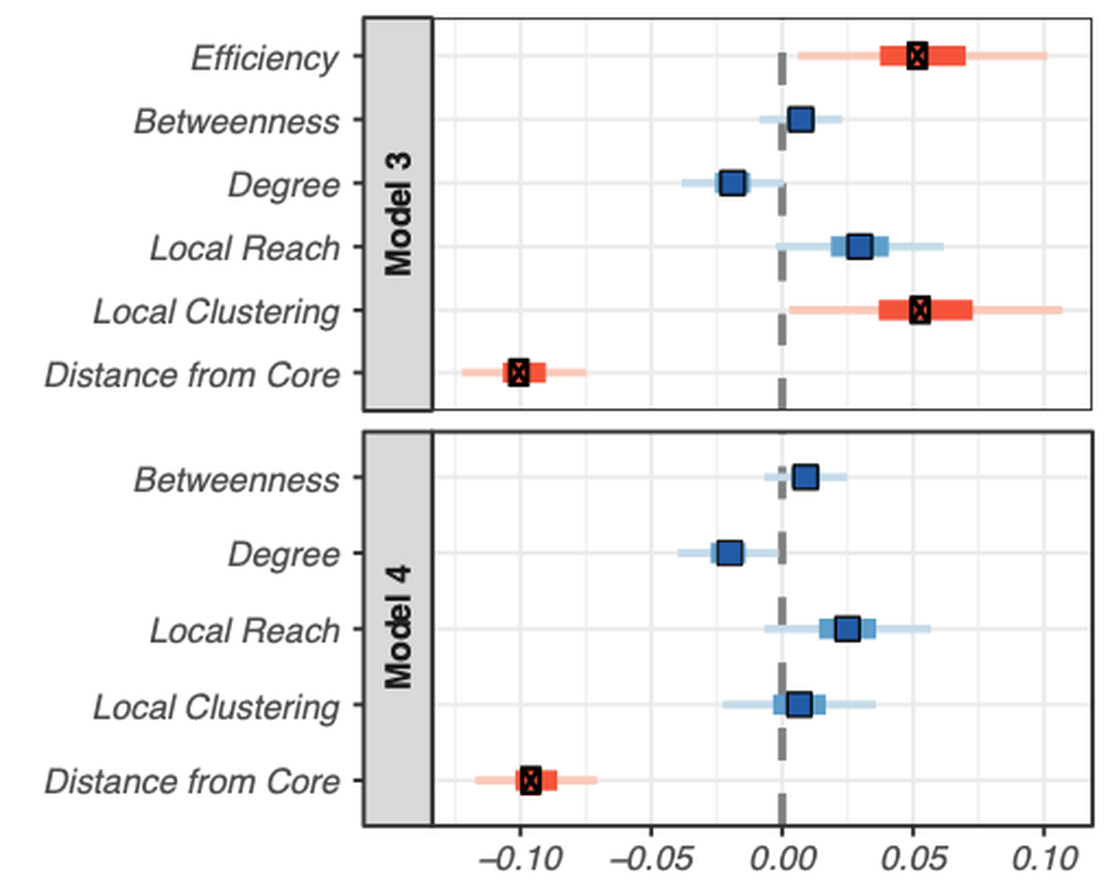
Network embeddedness indicates the innovation potential of firms
- Giacomo Vaccario , Luca Verginer , Antonios Garas , Mario V. Tomasello , Frank Schweitzer
- Science of science , Economic networks
The R&D network of 14,000 firms over 25 years was reconstructed to understand how network embeddedness affects innovation potential. This study found that firms with higher weighted k-core centrality have a higher innovation output. This means that being well-connected in the network can lead to more patents.
Read More
Foreword to the special issue on success in science
- Luca Verginer , Giacomo Vaccario , Alexander M Petersen
- Science of science
Science is a complex social endeavour that relies on collaboration networks to advance knowledge. This meta-science, or the 'science of science', helps stakeholders understand, shape and guide the development of this system. A key observation is that the number of references and co-authors per paper has increased, illustrating the importance of collaboration in synthesizing research findings. Understanding these networks and their evolution is crucial for identifying knowledge-generating processes in science and allocating resources efficiently.
Read More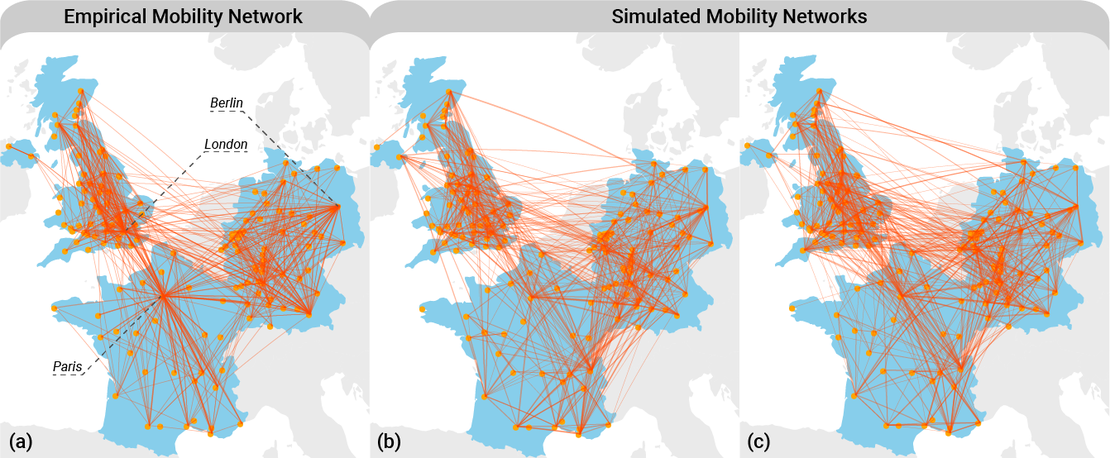
Reproducing scientists' mobility: a data-driven model
- Giacomo Vaccario , Luca Verginer , Frank Schweitzer
- Science of science , Data driven models , Agent based models
Scientists often move around the world to share ideas and work together, but how do these moves actually happen? This study looked at millions of career paths to map out how researchers travel between cities, countries and institutions. It found that most scientists prefer to move shorter distances, usually less than 1000 kilometers, and tend to choose places that are both close and well-regarded. The research also showed that the way we visualize these moves changes depending on the scale. At the city level, scientists move more freely, while at the country or institution level, clear pathways called “knowledge corridors” emerge. This helps us understand how knowledge spreads and how scientific careers develop over time, with important implications for both scientists and policymakers.
Read More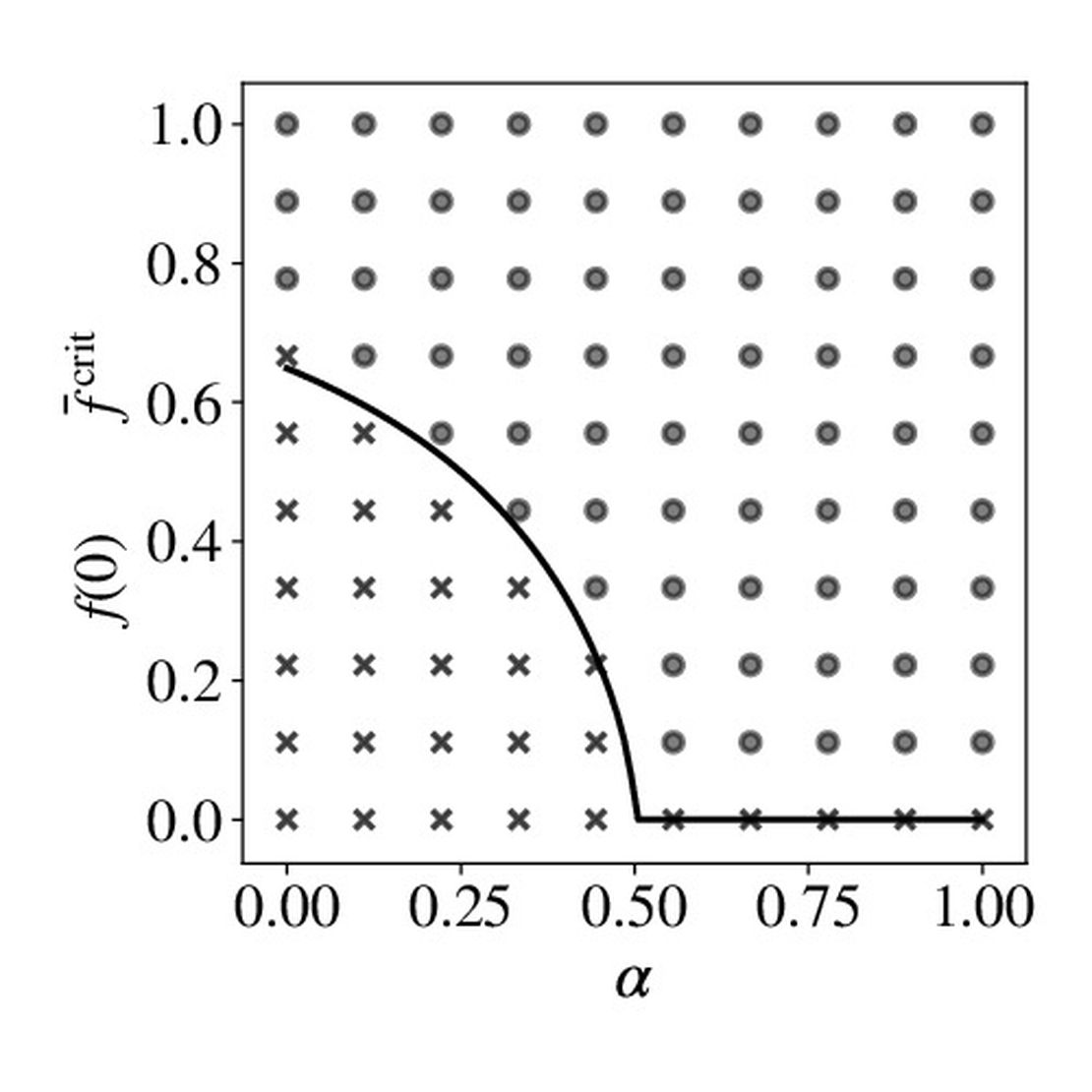
Should the government reward cooperation? Insights from an agent-based model of wealth redistribution
- Frank Schweitzer , Luca Verginer , Giacomo Vaccario
- Cooperation and opinion dynamics , Agent based models , Game theory
A multi-agent model was used to investigate how government bonuses impact cooperation. The model showed that bonuses can promote cooperation, especially in a global information regime. In this regime, the critical bonus needed to encourage cooperation decreases as the level of cooperation increases. This allows the government to lower tax rates while maintaining high cooperation levels.
Read More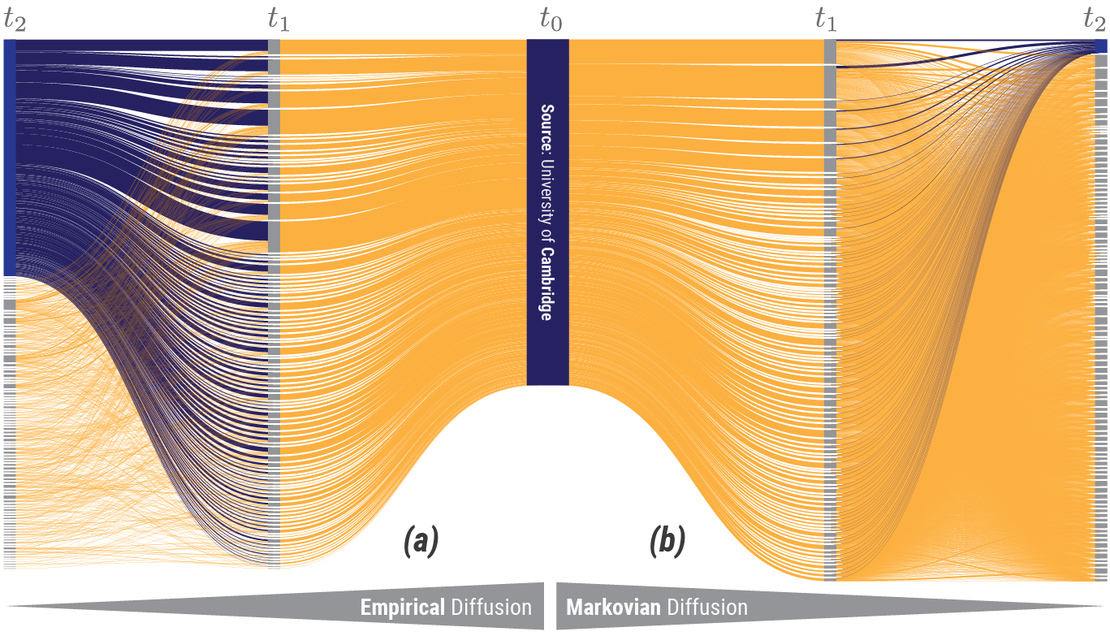
The mobility network of scientists: Analyzing temporal correlations in scientific careers
- Giacomo Vaccario , Luca Verginer , Frank Schweitzer
- Science of science , Data science , Network theory
The study of scientist mobility is important for knowledge exchange and understanding the career trajectories of scientists. The researchers analyzed 3.5 million career trajectories of scientists using a novel method of higher-order networks. They found strong evidence for temporal correlations at the level of universities, indicating that scientists tend to move between specific institutions. These correlations also exist at the level of countries but not cities. The results have implications for the efficiency of mobility programs and the institutional path dependence of scientific careers.
Read MoreTags
- Agent-Based Models
- Agentic AI
- Automation
- AutoML
- Cooperation and Opinion Dynamics
- Courses
- Data Science
- Data-Driven Models
- Economic Networks
- Game Theory
- Generative AI
- LLM
- Machine Learning
- Network Theory
- Pharmaceuticals
- Resilience
- Science Communication
- Science of Science
- Serious Games
- Signed Relations
- Structural Balance
- Supply Chain
- Sustainability
- System Thinking
- Wood in Construction