Beyond top-down policymaking: Policymaker–landowner interaction promotes reforestation in a strategy game
- Simona Rödlach , Giacomo Vaccario , Clare Cooper , Jaboury Ghazoul , Ivan P. Novotny
- Cooperation and opinion dynamics , Data science , Serious games , Sustainability
- May 21, 2026 Official Link
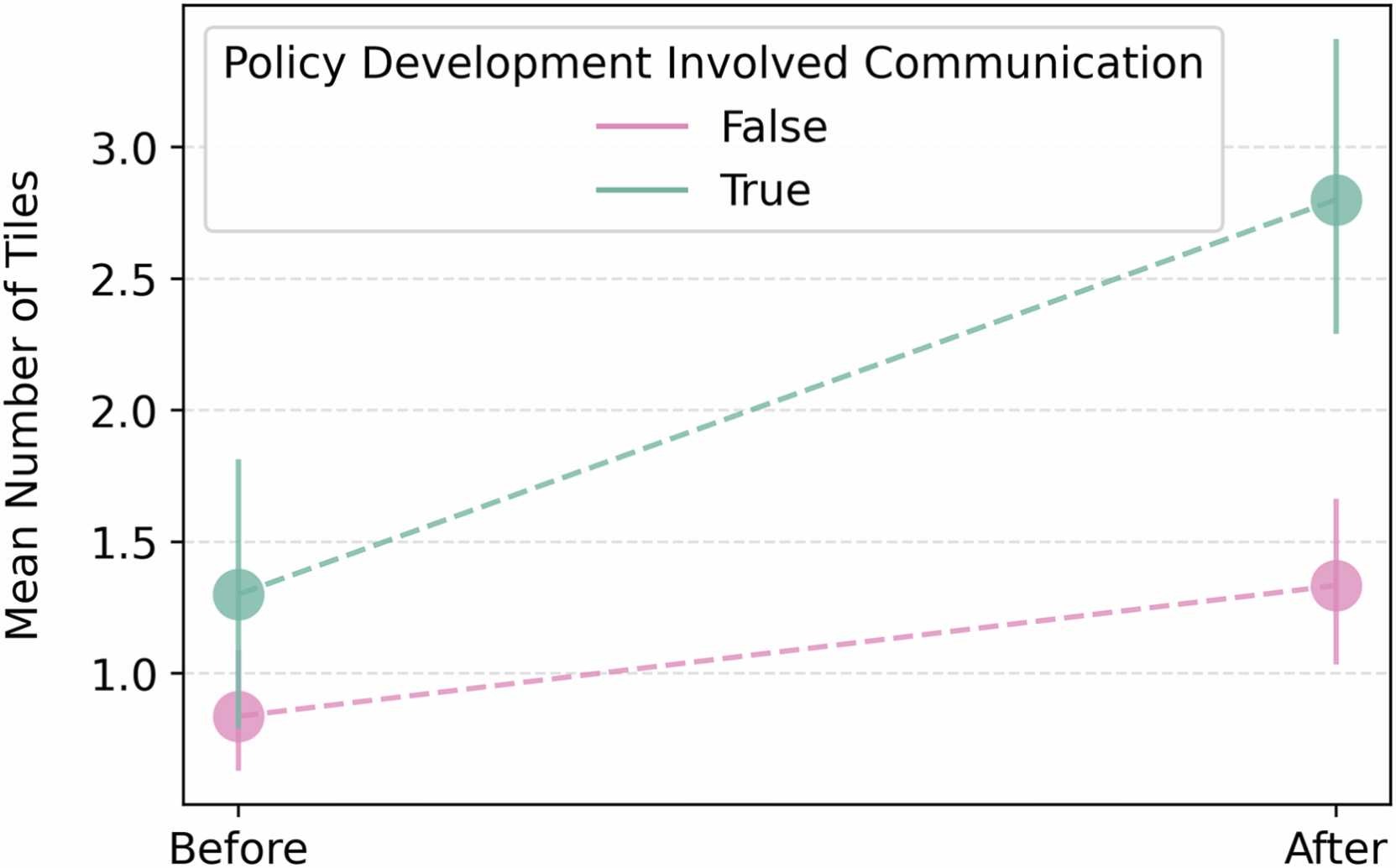
A study found that interacting with policymakers during policy drafting can increase adoption of reforestation strategies. The research used a strategy game to simulate real-world land management decisions in Scotland. The study suggests that early stakeholder engagement can enhance policy effectiveness by addressing ecological and social barriers to implementation.
This suggests that, under simplified experimental conditions, integrating stakeholder perspectives early in real-life policy formulation could enhance the effectiveness of reforestation strategies in Scotland by addressing both ecological and social barriers to successful implementation.
Why This Matters for Scientists
If you're a scientist, this study's findings on the importance of stakeholder engagement in policy adoption should encourage you to consider involving local communities in your research. Early stakeholder engagement can increase the effectiveness of reforestation strategies by addressing ecological and social barriers.
Quick Technical Overview
The study used a strategy game to simulate real-world land management decisions in Scotland. This approach allowed researchers to capture interactions between policymakers and landowners, demonstrating the effectiveness of participatory approaches in policy adoption. The study contributes to the understanding of how stakeholder perspectives can influence policy outcomes.
Participatory socio-ecological modeling can help to overcome these challenges by providing a deliberative co-design interface that facilitates higher-intensity interactions than traditional consultations.
Summary for Policy Makers
This study's findings have implications for environmental governance in regions where policy adoption is limited by low stakeholder engagement or misaligned incentives. The research suggests that accessible and engaging participatory approaches, such as strategy games, can foster more effective and widely supported environmental governance.
In regions where policy adoption is limited by low stakeholder engagement or misaligned incentives, accessible and engaging participatory approaches as represented by strategy games may foster more effective and widely supported environmental governance.
Disclaimer
The above summaries were generated with the assistance of an AI system.
Abstract
Scotland aims to achieve net-zero emissions by 2045, with afforestation and native woodland restoration as key strategies, targeting 25% woodland cover by 2050, or roughly 10,000 ha of new woodland annually. Much of this expansion depends on private landowners often supported by public subsidies. Yet landowners are often resistant to native woodland expansion on account of their prioritization of traditional land uses and perceived economic risks. Understanding the factors that influence landowner uptake is therefore crucial for designing effective policies. This raises the question: how does interaction between policymakers and landowners affect policy adoption? To provide insights on this, we developed a custom strategy game as an interactive socio-ecological model in which local stakeholders develop land and resource use strategies as estate owners, farmers, or policymakers. In the game setting, ‘landowners’ made decisions on land-related economic activities, while ‘policymakers’ enacted policies with potential impact on the ‘landowners’ activities. In-game landscape indicators tracked land use changes. Discussions among players were recorded with a microphone for later analysis. We showed that interactions during policy drafting between land managers and policymakers within the frame of the game modeling process are associated with higher adoption rates of proposed policies. This suggests that, under simplified experimental conditions, integrating stakeholder perspectives early in real-life policy formulation could enhance the effectiveness of reforestation strategies in Scotland by addressing both ecological and social barriers to successful implementation. More broadly, in regions where policy adoption is limited by low stakeholder engagement or misaligned incentives, accessible and engaging participatory approaches as represented by strategy games may foster more effective and widely supported environmental governance.