Coexistence of balance and hierarchies: An ego perspective to explain empirical networks
- Piotr J Górski , Adam Sulik , Georges Andres , Giacomo Vaccario , Janusz A Hołyst
- Cooperation and opinion dynamics , Data driven models , Agent based models , Signed relations
- April 25, 2025 Official Link
How do people change positive and negative relations in social networks? Two conflicting mechanisms, balance and status hierarchies, coexist and influence each other. The mechanisms are integrated into an agent-based model where individuals aim to resolve inconsistencies with balance and status. By fitting the model to real-world networks, one can successfully replicate observed patterns in social networks. The study suggests that social configurations may be fragile and vulnerable to disruptions.
We integrate both mechanisms by considering the ego perspective of an individual agent who can change only her own relations to others and possesses only limited information about others’ relations.
Why This Matters for Scientists
If you're a scientist, you may want to consider the implications of this study. The research suggests that balance and status hierarchies are not mutually exclusive, but rather intertwined. This has significant implications for understanding social dynamics and developing models that can accurately predict behavior.
Quick Technical Overview
The study proposed an agent-based model that integrates structural balance theory and status theory. The model assumes that individuals have limited knowledge and can only change their own relations. This approach allows for a more realistic representation of social networks, which are typically modeled using separate processes for balance and status.
However, it is challenging to distinguish between SBT and ST in generating the observed relations, especially in social organizations that are not formally organized.
Summary for Policy Makers
The study's findings have significant implications for understanding social dynamics and developing policies that promote social cohesion. The research suggests that social configurations may be fragile and vulnerable to disruptions, highlighting the need for more nuanced approaches to understanding and addressing social issues. The study's findings also emphasize the importance of considering the interplay between balance and status hierarchies in social networks.
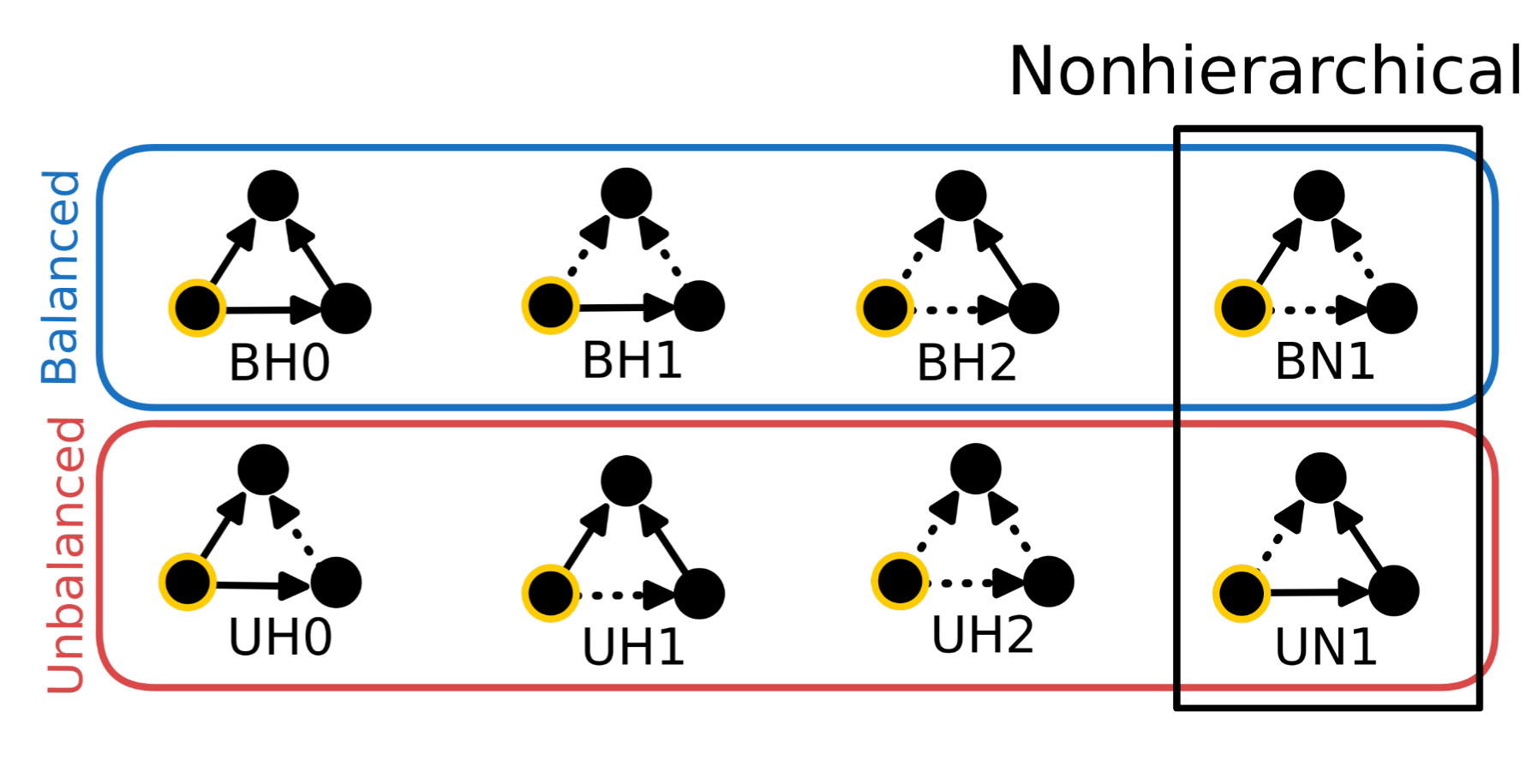
Our work bridges this gap by integrating these two perspectives into a unified framework of ego dynamics where an agent has limited, local knowledge and can only change her own relations to be consistent with either SBT or ST rules.
Disclaimer
The above summaries were generated with the assistance of an AI system.
Abstract
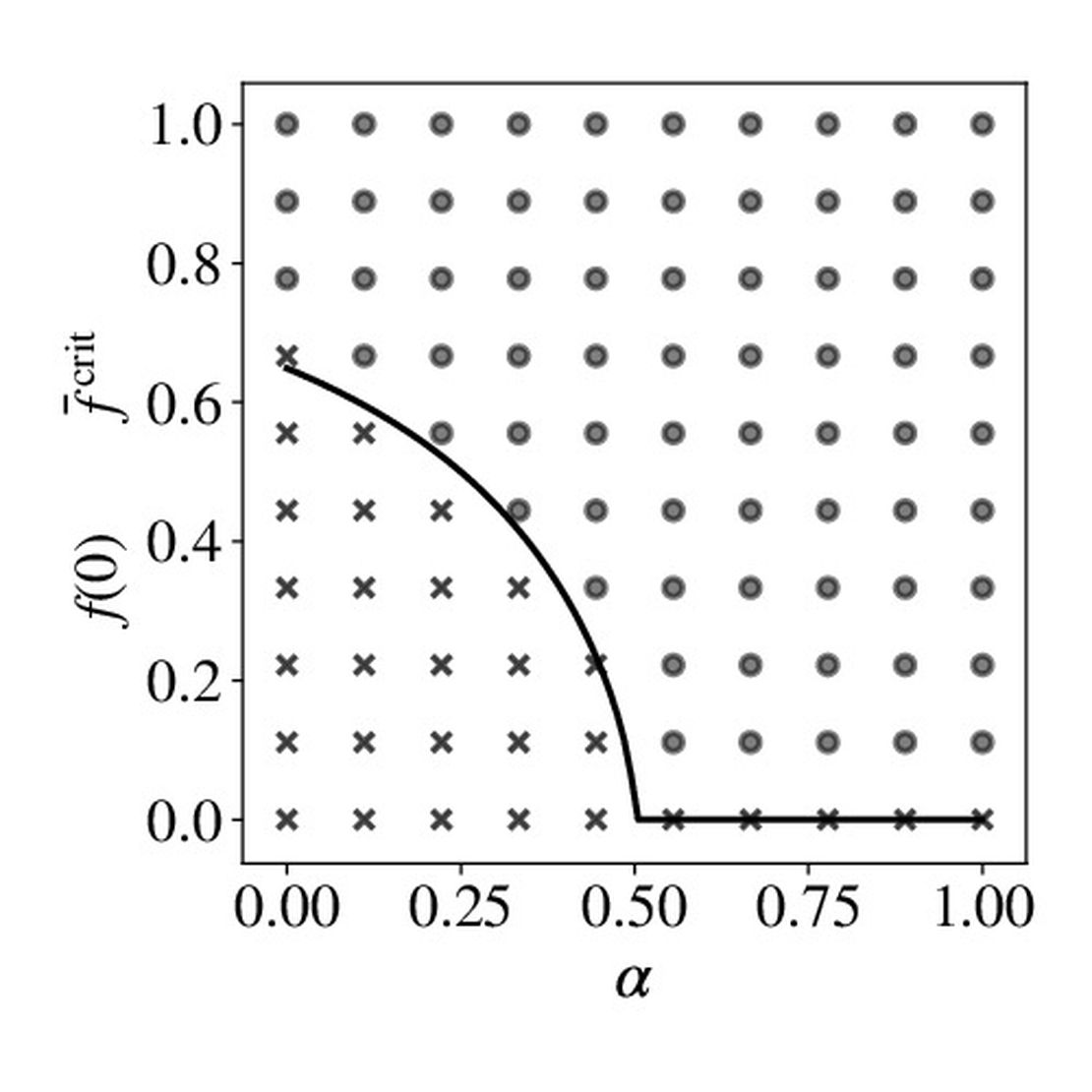
The formation of positive and negative relations between individuals in social networks can be described by different approaches. Two prominent mechanisms are structural balance and status hierarchies. Balance motivates stability among friends and enemies in triads (e.g. an enemy of my friend is my enemy). Status considers respect and disregard originating from social hierarchy (e.g. positive relations towards those we respect). We demonstrate that integrating the two mechanisms through the concept of ego dynamics is key to understanding observable patterns in many social groups. We propose an agent-based model where dynamical changes result from agents aiming to resolve inconsistencies with structural balance and status. In contrast to previous models, our approach employs the ego perspective. Agents have limited, local knowledge and can only change their own relations. By fitting the model to real-world networks, we successfully replicated the observed over- and under-representations of certain triads in 36 empirical signed networks. This close matching to empirical data is achievable only by taking the ego perspective and not assuming global knowledge. Additionally, the model reveals that, when the status mechanism dominates, people in real networks tend to strive for the top of the hierarchy. Finally, our numerical simulations and analytic solutions demonstrate that a previously thought as continuous phase transition towards the paradise state (all links positive) can become discontinuous when the status mechanism is involved. This discontinuity indicates that desirable social configurations may, in fact, be quite fragile.