Foreword to the special issue on success in science
- Luca Verginer , Giacomo Vaccario , Alexander M Petersen
- Science of science
- December 6, 2021 Official Link
Science is a complex social endeavour that relies on collaboration networks to advance knowledge. This meta-science, or the 'science of science', helps stakeholders understand, shape and guide the development of this system. A key observation is that the number of references and co-authors per paper has increased, illustrating the importance of collaboration in synthesizing research findings. Understanding these networks and their evolution is crucial for identifying knowledge-generating processes in science and allocating resources efficiently.
Science is a social endeavour and is carried out by many scientists cumulatively and simultaneously.
Why This Matters for Scientists
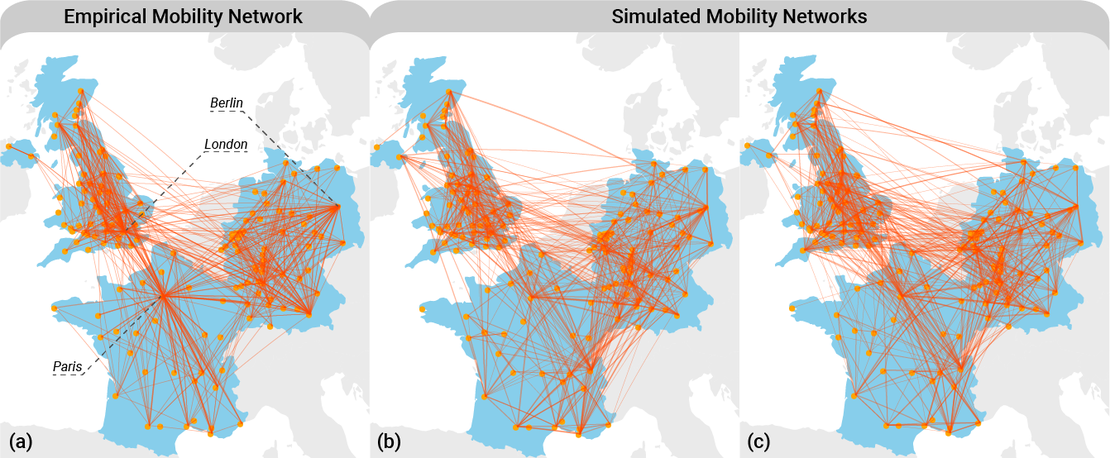
As a scientist, you may want to consider the global nature of science and the importance of international collaborations when designing your research projects. A study on global cities in international networks of innovators has identified cities that are pivotal for international collaborations.
Quick Technical Overview
The papers in this special issue use large open publication repositories to analyze the structure of scientific progress. One study leverages the ArXiv repository to reconstruct the structure of knowledge in science, while another investigates how different scientific protocols are used in economics. These studies provide valuable insights into the complex interplay of established and emerging topics in science.
Thanks to fine-grained data tracking a scientist's location over time, it is now possible to address the global nature of science by studying scientists' international collaborations and careers.
Summary for Policy Makers
Policymakers and stakeholders should be aware of the complex social and cognitive dimensions of wicked environmental problems. A framework for understanding how scientists tackle these problems has been proposed, and it highlights the importance of coherent problem-solving strategies. By supporting research in this area, policymakers can help address the wicked problems that have emerged in coupled human and natural systems.
A better understanding of how communities of researchers form coherent problem-solving strategies may help to address the wicked problems that have emerged in coupled human and natural systems.
Disclaimer
The above summaries were generated with the assistance of an AI system.
Abstract
Science represents a significant human achievement, and has been a force for technological and societal change. It is also a complex social enterprise with many interacting stakeholders, which has given rise to a complex academic ecosystem. Within this ecosystem, scientists, universities, funding bodies, publishers, governments and many more interact to support its advancement. It is necessary to look at science through the scientific lens to help these stakeholders understand, shape and guide the development of this system. The present Topical Issue looks precisely at this meta-science, more commonly known as the science of science