Should the government reward cooperation? Insights from an agent-based model of wealth redistribution
- Frank Schweitzer , Luca Verginer , Giacomo Vaccario
- Cooperation and opinion dynamics , Agent based models , Game theory
- February 8, 2021 Official Link
A multi-agent model was used to investigate how government bonuses impact cooperation. The model showed that bonuses can promote cooperation, especially in a global information regime. In this regime, the critical bonus needed to encourage cooperation decreases as the level of cooperation increases. This allows the government to lower tax rates while maintaining high cooperation levels.
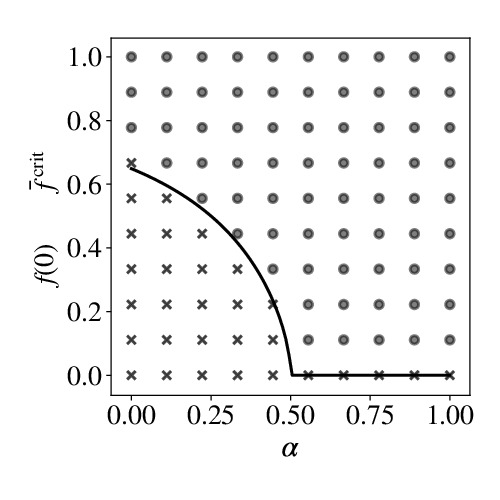
Full cooperation can be achieved once the cold-start problem is solved because the critical bonus decreases with the level of cooperation.
Why This Matters for Scientists
If you're a scientist, you may want to consider implementing a global information regime in your research to promote cooperation. This approach has been shown to be effective in agent-based simulations and could lead to sustainable cooperation. Additionally, you may want to explore the potential drawbacks of the local information regime.
Quick Technical Overview
The agent-based model developed in this paper is simpler and more analytically tractable than previous models. It is based on a game-theoretical setting and allows the government to collect taxes on gains from cooperative and defective behavior.
With respect to these external incentives, our model bears some similarities to nudging in that the central authority does not forbid a specific behavior.
Summary for Policy Makers
Governments can use bonuses to promote cooperation among agents. The global information regime has been shown to be effective in promoting sustainable cooperation. This approach allows the government to lower tax rates while maintaining high cooperation levels. By implementing this regime, governments can create an environment that encourages cooperation and reduces the need for costly punishments.
These interesting findings are obtained analytically and further confirmed by means of agent-based simulations.
Disclaimer
The above summaries were generated with the assistance of an AI system.
Abstract
In our multi - agent model agents generate wealth from repeated interactions for which a prisoner's dilemma payoff matrix is assumed. Their gains are taxed by a government at a rate α. The resulting budget is spent to cover administrative costs and to pay a bonus to cooperative agents, which can be identified correctly only with a probability p. Agents decide at each time step to choose either cooperation or defection based on different information. In the local scenario, they compare their potential gains from both strategies. In the global scenario, they compare the gains of the cooperative and defective subpopulations. We derive analytical expressions for the critical bonus needed to make cooperation as attractive as defection. We show that for the local scenario the government can establish only a medium level of cooperation, because the critical bonus increases with the level of cooperation. In the global scenario instead full cooperation can be achieved once the cold - start problem is solved, because the critical bonus decreases with the level of cooperation. This allows to lower the tax rate, while maintaining high cooperation.