Publications
- Home /
- Publications
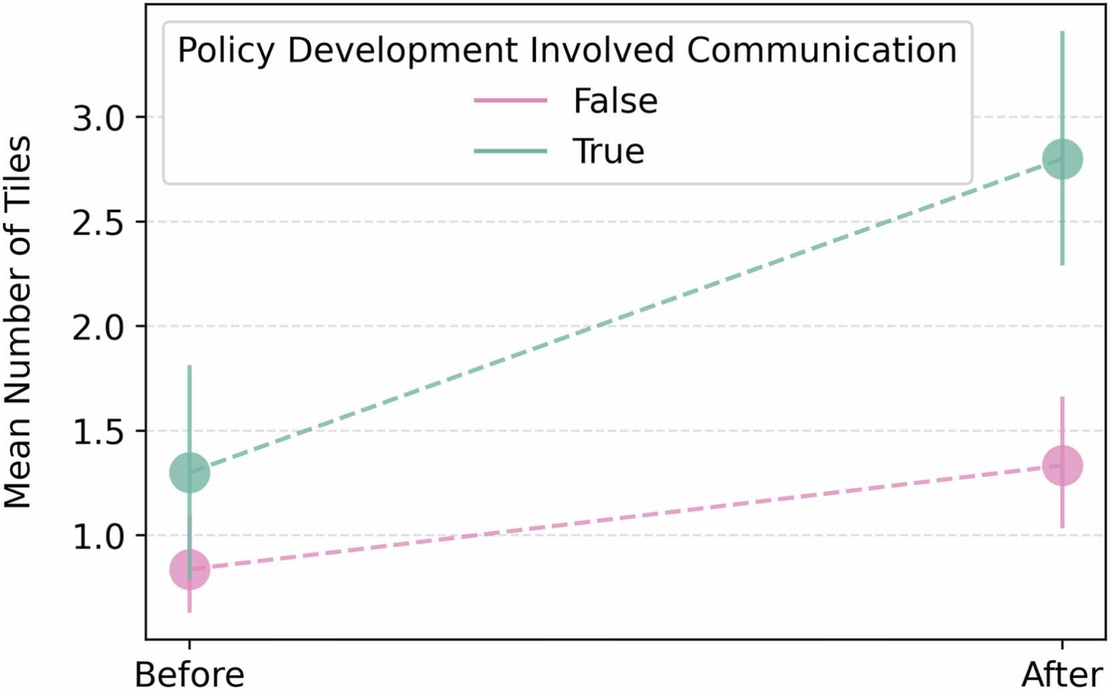
Beyond top-down policymaking: Policymaker–landowner interaction promotes reforestation in a strategy game
- Simona Rödlach , Giacomo Vaccario , Clare Cooper , Jaboury Ghazoul , Ivan P. Novotny
- Cooperation and opinion dynamics , Data science , Serious games , Sustainability
A study found that interacting with policymakers during policy drafting can increase adoption of reforestation strategies. The research used a strategy game to simulate real-world land management decisions in Scotland. The study suggests that early stakeholder engagement can enhance policy effectiveness by addressing ecological and social barriers to implementation.
Read More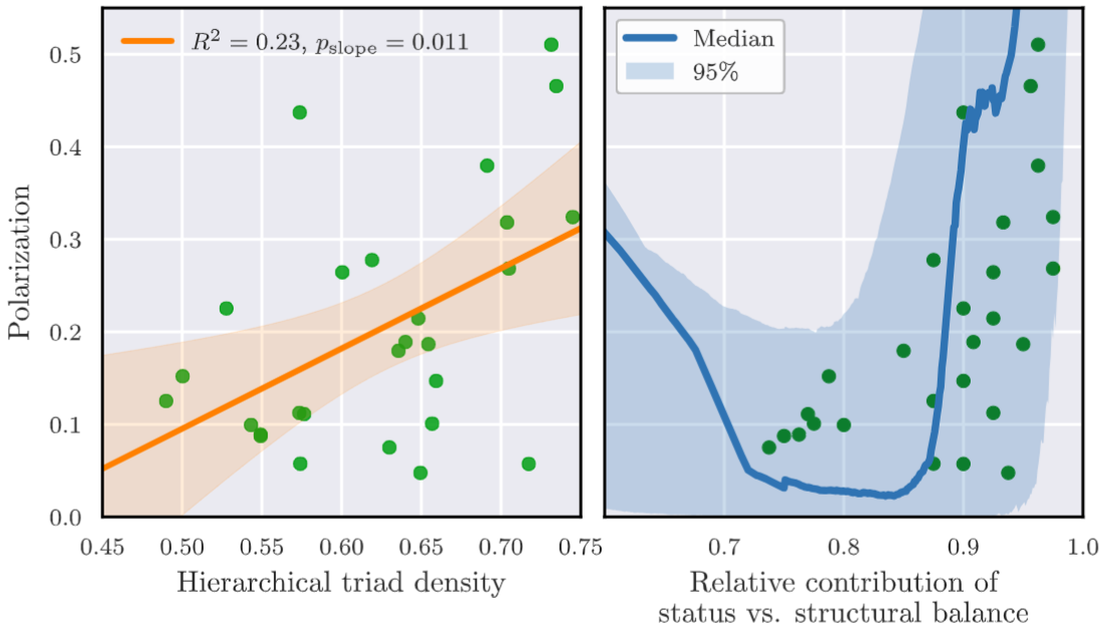
More connections, higher polarization: The role of weak ties and status-driven dynamics
Researchers found that increasing connections in social networks can lead to higher polarization, but through a different mechanism than previously thought.
Read More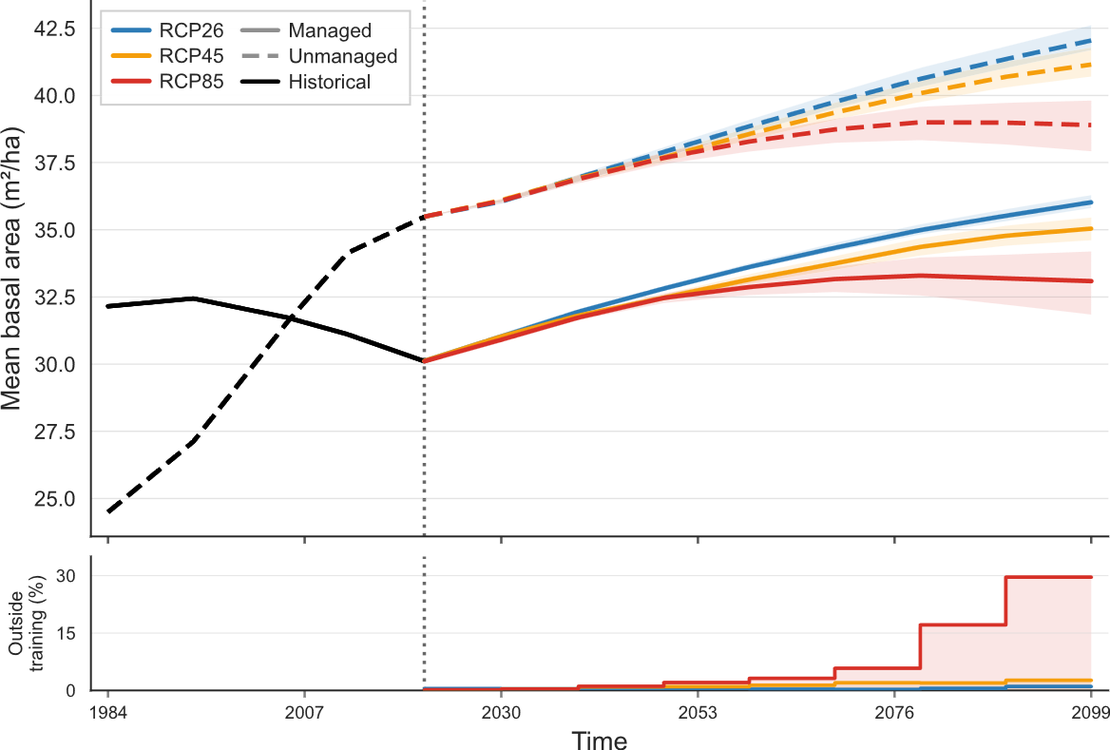
Machine learning for modeling forest dynamics using National Forest Inventory and climate data
Forest dynamics modeling is crucial for forest management planning. Researchers developed a national-scale XGBoost model using Swiss National Forest Inventory data and climate scenarios to predict changes in basal area and broadleaf proportion. The model's predictions were accurate, with an R2 of 0.66 for basal area and 0.91 for broadleaf proportion. The model's results indicate an overall increase in basal area, although unmanaged lower-elevation belts decrease, and an increase in broadleaf proportion mainly at lower elevations.
Read More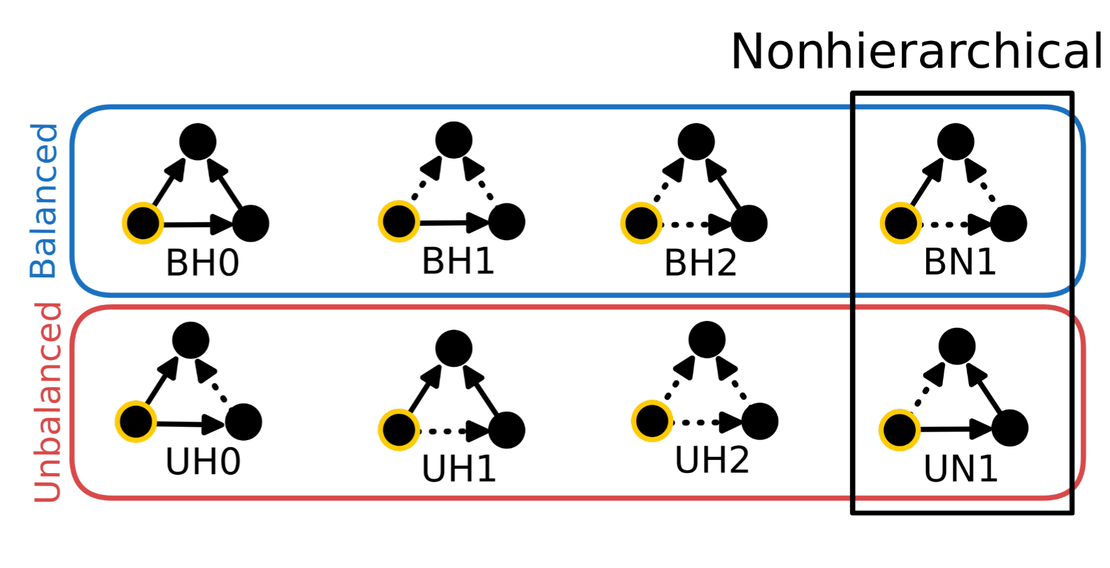
Coexistence of balance and hierarchies: An ego perspective to explain empirical networks
- Piotr J Górski , Adam Sulik , Georges Andres , Giacomo Vaccario , Janusz A Hołyst
- Cooperation and opinion dynamics , Data driven models , Agent based models , Signed relations
How do people change positive and negative relations in social networks? Two conflicting mechanisms, balance and status hierarchies, coexist and influence each other. The mechanisms are integrated into an agent-based model where individuals aim to resolve inconsistencies with balance and status. By fitting the model to real-world networks, one can successfully replicate observed patterns in social networks. The study suggests that social configurations may be fragile and vulnerable to disruptions.
Read More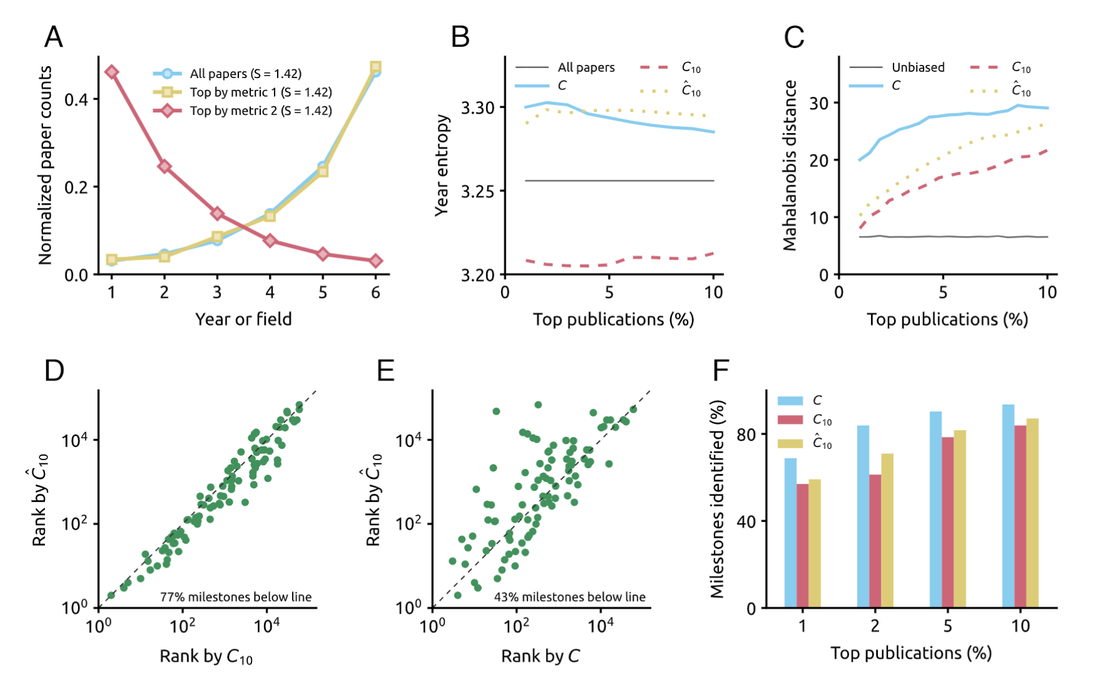
The quest for an unbiased scientific impact indicator remains open
- Giacomo Vaccario , Shuqi Xu , Manuel S Mariani , Matúš Medo
- Science of science
A study published in the journal PNAS questioned the unbiasedness of a scientific impact indicator called ̂c10, which was previously thought to be fair. The analysis shows that ̂c10 exhibits a strong age bias, meaning it favors older papers over newer ones. This bias is due to ̂c10's tendency to rank older papers higher than younger ones. The study suggests that this bias could be a problem for scientists who rely on ̂c10 to evaluate the impact of their research. Furthermore, the study found that raw citation count c outperforms ̂c10 in identifying groundbreaking research, because it is not controlled for temporal distribution. This calls into question the fairness of ̂c10 and highlights the need for more research into algorithmic bias and fairness in scientometrics. The authors of the study suggest that developing unbiased indicators of scientific impact remains a pressing question in the scientometrics and science of science communities.
Read More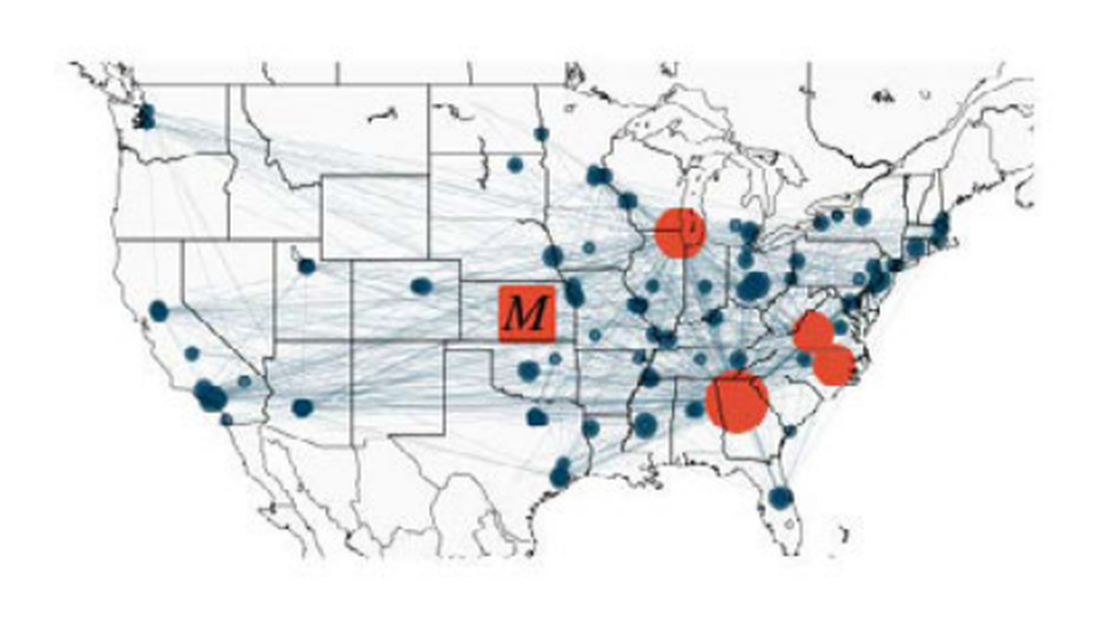
Efficiency and resilience: Key drivers of distribution network growth
- Ambra Amico , Giacomo Vaccario , Frank Schweitzer
- Pharmaceuticals , Economic networks , Resilience , Data driven models , Agent based models , Supply chain
Distribution networks, which supply goods from manufacturers to final buyers, are crucial for a functioning economy. A network model is proposed to describe the emergence and growth of these networks. The model considers two firm-level practices: centralization and multi-sourcing. Centralization enhances network efficiency by using short distribution paths, while multi-sourcing fosters resilience by providing multiple distribution paths. The model was validated using data on drug shipments in the US, and it successfully replicates several structural features of the empirical networks, including their out-degree and path length distributions, as well as their resilience and efficiency properties. The findings suggest that the proposed firm-level practices effectively capture the network growth process that leads to the observed structures.
Read More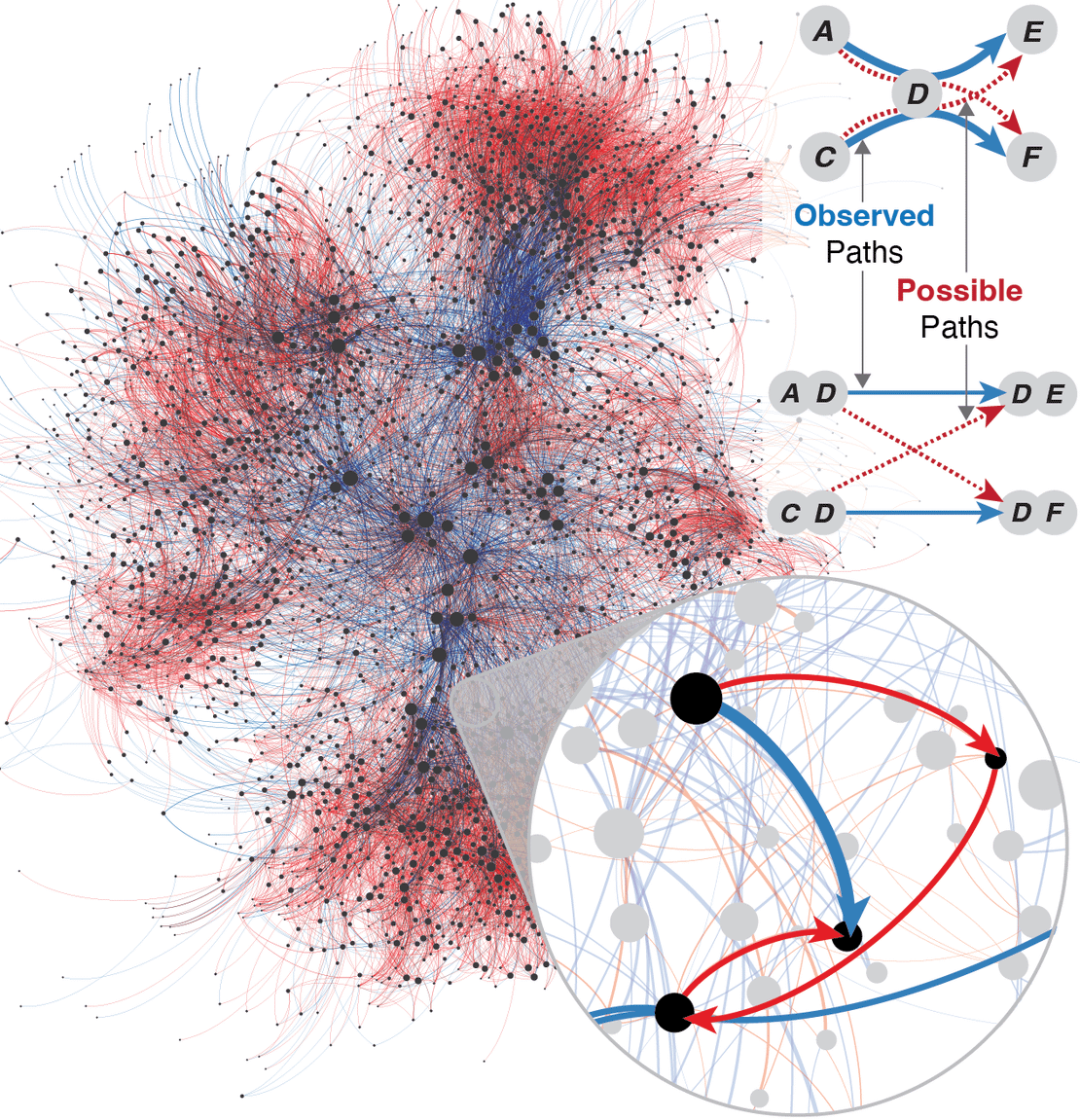
Adapting to disruptions: Managing supply chain resilience through product rerouting
- Ambra Amico , Luca Verginer , Giona Casiraghi , Giacomo Vaccario , Frank Schweitzer
- Pharmaceuticals , Economic networks , Resilience , Supply chain
Reconstructing signed relations from interaction data
- Georges Andres , Giona Casiraghi , Giacomo Vaccario , Frank Schweitzer
- Signed relations , Network theory , Data science
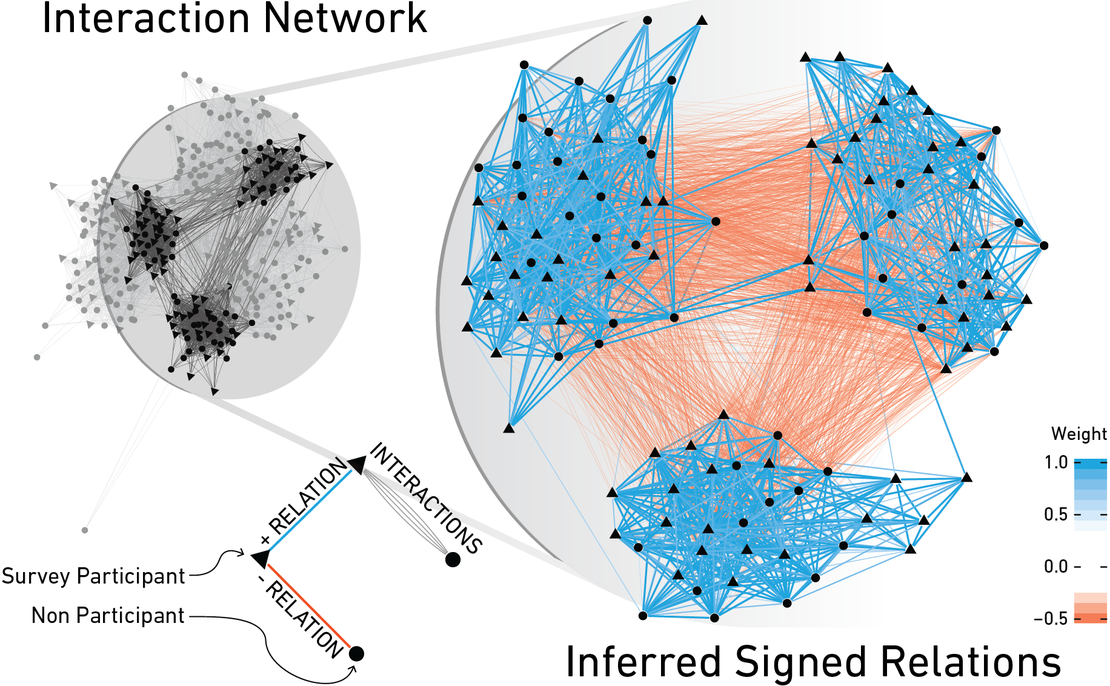
This study presents a statistical network method to infer weighted signed relations from interaction data. The method, called the Φ-method, assumes that a statistical over-representation of interactions signals a positive relation and an under-representation signals a negative relation. TheΦ-method was tested on four classical interaction datasets and showed promising results in predicting reported relations and reconstructing the underlying relational networks of the communities.
Read More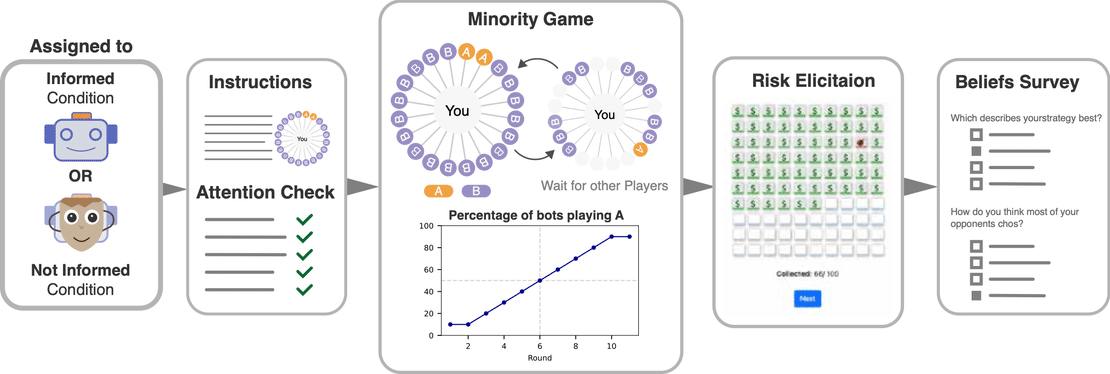
Irrational herding persists in human-bot interactions
- Luca Verginer , Giacomo Vaccario , Piero Ronzani
- Cooperation and opinion dynamics , Game theory
A study of 1,997 participants playing a minority game with bots found that 30% followed the majority, despite theoretical expectations of no herding. The study explored how humans interact with automated entities and how their behavior changes when they are aware of interacting with bots. Herding behavior persisted even when participants were aware of interacting with automated entities.
Read More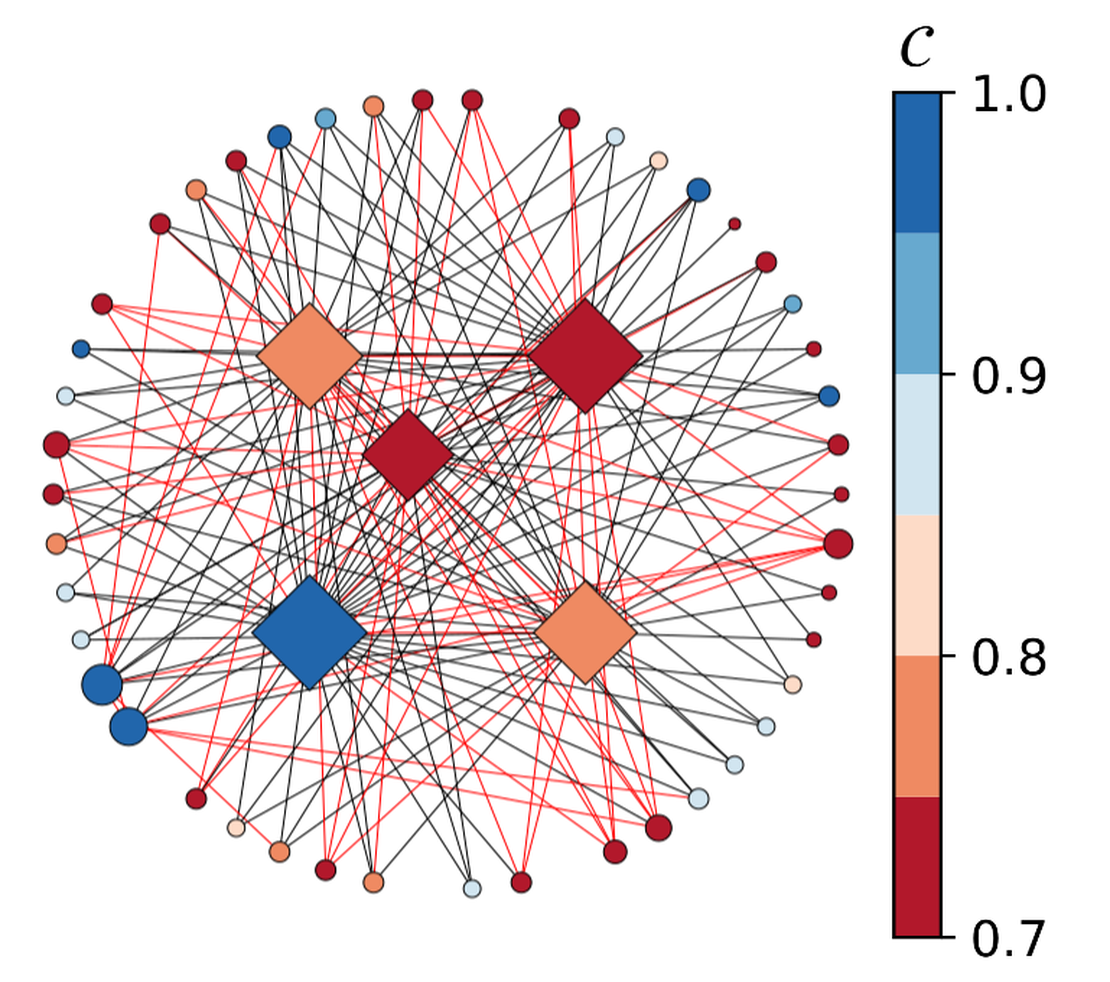
Modeling the impact of environmental consciousness on the supply-demand relationship between firms and customers
- Tianyuan Wang , Giacomo Vaccario , Frank Schweitzer
- Signed relations , Economic networks , Network theory
The study models the impact of environmental consciousness on the supply-demand relationship between firms and customers. Environmental consciousness can lead to supply-demand deficits, but customers forming unconditional supply links and firms improving their environmental-friendly production can mitigate these deficits. The results show that this approach can inform policies to reduce both supply-demand deficits and environmental pollution.
Read MoreTags
- Agent-Based Models
- Agentic AI
- Automation
- AutoML
- Cooperation and Opinion Dynamics
- Courses
- Data Science
- Data-Driven Models
- Economic Networks
- Game Theory
- Generative AI
- LLM
- Machine Learning
- Network Theory
- Pharmaceuticals
- Resilience
- Science Communication
- Science of Science
- Serious Games
- Signed Relations
- Structural Balance
- Supply Chain
- Sustainability
- System Thinking
- Wood in Construction