Knowledge in socio-economic systems - Insights from collaboration, mobility, and data-driven models
- Giacomo Vaccario
- Network theory , Data science , Science of science , Agent based models
- October 31, 2024
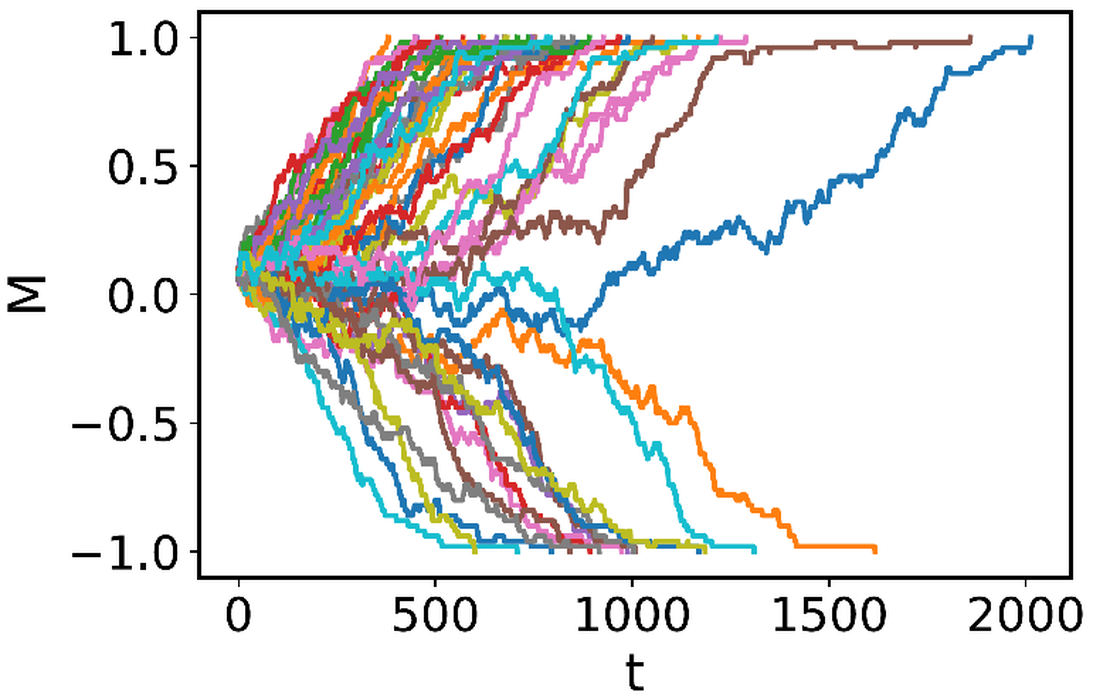
The researchers studied how group interactions affect the emergence of consensus in a spin system. They found that group interactions amplify small initial opinion biases, accelerate the formation of consensus, and lead to a drift of the average magnetization. The model considers groups of agents represented by hyperedges of different sizes in a hypergraph. The heterogeneity of group sizes is controlled by a parameter β. The study aims to understand the impact of β on reaching consensus. The researchers used computer simulations and an analytic approach to study the dynamics of the average magnetization.
Read More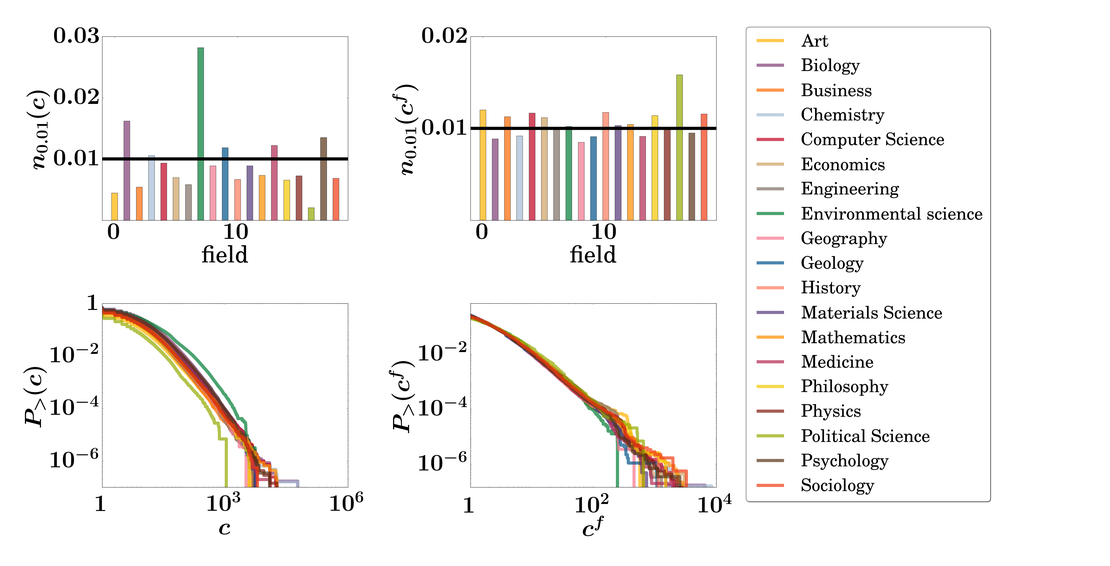
Citation counts for papers from different fields can't be compared directly because they adopt different citation practices. Researchers have proposed various procedures to suppress these biases, but a new statistical framework shows that existing indicators, including the relative citation count, are still biased by paper field and age. A new normalization procedure motivated by the z-score produces much less biased rankings when applied to citation count and PageRank score. The problem of achieving an ideal unbiased ranking of publications remains open.
Read More